
Sump Pump Installation With Battery Backup Options
A properly sized pump, basin and discharge line so rising water never reaches your floor.
Call (971) 772-3963When water rises faster than it drains
You hear a gurgle in the basement during a storm, then see a dark ring spreading from the floor drain or a wet seam along the wall. Water in a basement or crawl space often arrives from below. The groundwater level rises, the floor becomes the lowest point, and the water comes up wherever it finds a way.
In Portland, that happens in the wet months. Rain from October to May fills clay and silt that cannot drain quickly, so the water table climbs and stays high. On low lots, near creeks and in areas where the ground is flat, it can reach the level of a basement floor or crawl space. The water pushes up through cracks, the joint along the wall and sometimes through the floor itself.
If water has no place to go, it stays, and the room becomes damp or floods. Sump pump installation gives it a place: a pit in the floor collects the water, and a pump sends it out of the house through a discharge line.
The first sign in many Portland homes is the sound. A faint gurgle from the floor drain during a storm, or a pump that has never run suddenly cycling every few minutes. In Portland, where January can bring days of steady rain, a pump that kicks on is the house telling you the water table has risen.
How we handle sump pump installation, step by step
A good sump system is planned around where the water enters and how much there is.
- Step 1: Find the low point. We check where water collects and where drain lines can bring it, and pick the location for the pit.
- Step 2: Cut the slab. A section of the concrete floor is cut and removed, and the soil beneath is dug out to the depth of the basin.
- Step 3: Set the basin. A sealed, perforated basin is set in washed gravel, and its lid is sealed to the floor to keep out moisture and radon.
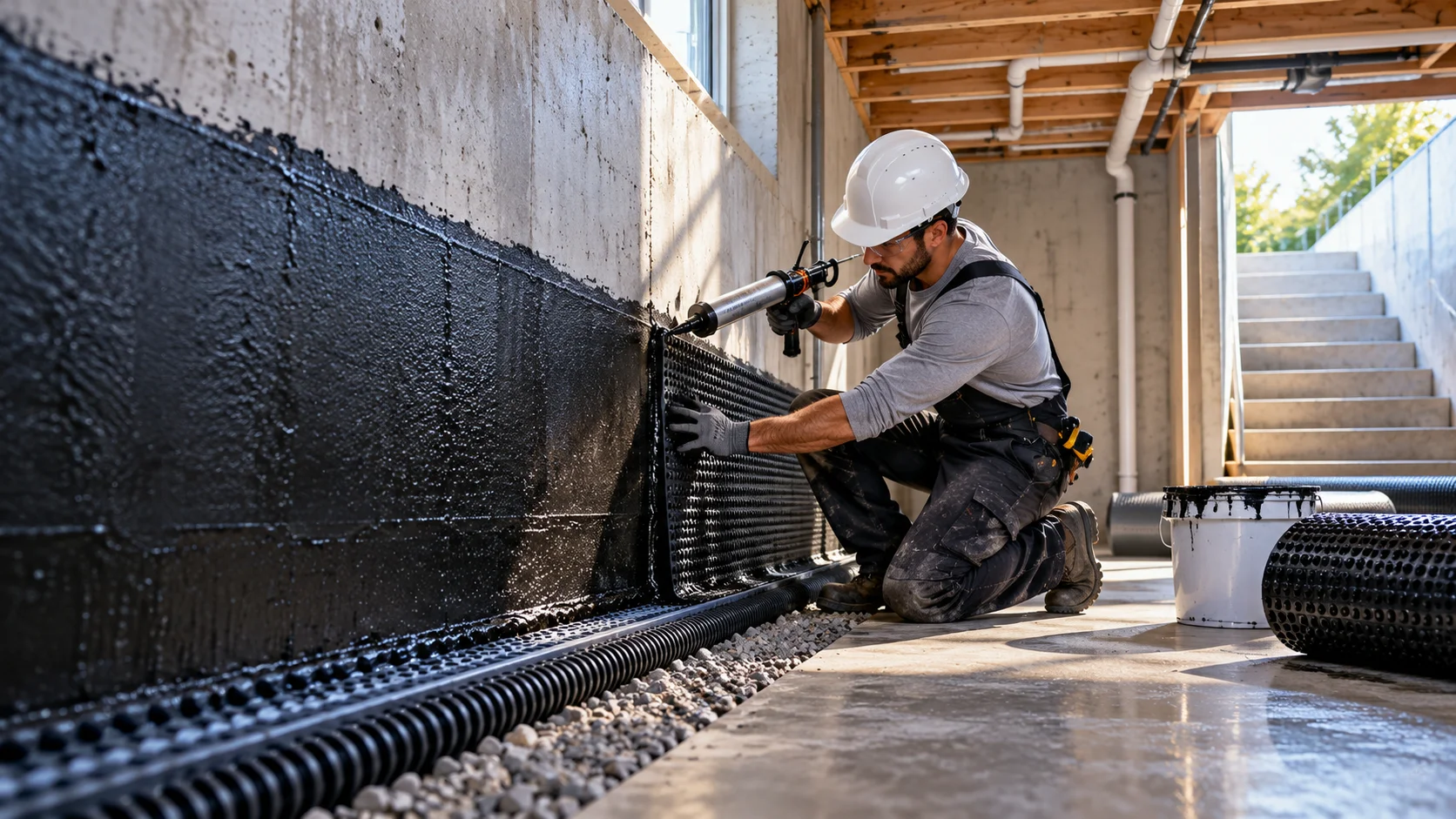
- Step 4: Connect drainage. Interior or perimeter drains are tied into the basin so water from the whole area is directed there.
- Step 5: Install the pump. A pump sized to the water volume goes in the basin with a float switch, and a check valve on the discharge line stops water from flowing back.
- Step 6: Run the discharge. Solid pipe carries the water out of the house to a point well away from the foundation, where it will not return.
- Step 7: Patch and test. The slab is patched with new concrete, the pump is tested by filling the basin, and we confirm it cycles on and off properly.
We can add a battery backup so the pump keeps working during the power outages that often come with winter storms.
The check valve is a small part with a big job. Without it, water in the discharge line runs back into the basin each time the pump stops, and the pump cycles on again and again. A good sump pump installation includes a proper valve, a sealed lid and a discharge that does not clog or aim at the neighbor.
Signs you need a sump pump
- Water seeping up through the floor or at the floor and wall joint during rain
- A basement or crawl space that floods during wet weather
- A drain or French drain system with no way to move collected water out
- An existing pump that runs constantly, short-cycles or has stopped working
- Musty smell and damp floors that return every wet season
- Water stains or tide marks on basement walls near the floor
- A house on low ground, near a creek or on flat terrain
- Past flooding from a heavy storm or power outage
What affects the cost of sump pump installation
Costs depend on the system and the house. The main factors are:
- Pump size and type: Pumps are sized to the volume of water, and a more powerful pump costs more.
- Basin and slab work: Cutting and patching concrete adds labor, and a thicker slab takes longer.
- Discharge distance: A long run to a safe discharge point takes more pipe and labor.
- Backup systems: A battery or water-powered backup adds a layer of protection.
- Connected drainage: Whether the pump works with an interior drain or a perimeter drain changes the scope.
For exact pricing on your home, call (971) 772-3963.
When French drain installation is the better fit
A sump pump deals with water that reaches the inside of the house. If the real issue is water collecting in the yard and pressing against the foundation, French drain installation addresses it earlier: it intercepts water outside and carries it away before it reaches the wall.
The right answer is often both. A French drain reduces how much water reaches the foundation, and a sump pump handles what still gets through. If your basement is wet only in the worst storms and the yard is soggy, start outside. If water comes up through the floor, you need a sump. We look at where the water is coming from and tell you what you need.
Why acting before the next rainy season matters
Sump pump installation needs a cut in the slab and some digging, and it is easier and cleaner in dry weather. A pump installed in September is tested and ready before the first big storm.
Without a pump, rising groundwater floods the lowest level, and the costs add up: ruined flooring, soaked drywall, stored belongings and mold. Mold begins in as little as a couple of days in a wet space.
An existing pump needs a check too. Pumps wear out, and one that fails during a storm leaves the house with no protection. Testing or replacing in fall means you find out before the water arrives.
Sump pump installation FAQ
How do I know what size pump I need?
It depends on how much water enters and how high it needs to be pumped. We size the pump after seeing the water, the basin and the discharge route.
What happens when the power goes out?
A standard pump stops. A battery backup keeps it running for hours, which matters in winter storms when outages and heavy rain happen together.
Where does the discharged water go?
Out through a pipe to a point away from the foundation, such as a daylight outlet, a storm connection where allowed or a dry well. It should not drain back toward the house.
How often should a sump pump be replaced?
Many last several years, and heavy use shortens the life. Testing it each fall by filling the basin with water is a good habit.
Does a sump pump make noise?
It makes some noise when running, but a sealed basin lid and a good check valve keep it modest. The sound means it is working.
Should I get a battery backup with my sump pump?
If your pump matters, yes. Winter storms in Portland often knock out power right when the pump is working hardest. A battery backup keeps it running for hours, and it is a small cost compared with a flooded basement.
Can a sump pump discharge into the sewer?
Generally not. Discharge usually has to go outside, away from the foundation, to a legal point such as a yard, a storm connection where allowed or a dry well. We plan the route with local rules in mind.
Call (971) 772-3963 and tell us where the water enters. We will schedule a visit and plan a sump system that fits.
Where we do this work
Need sump pump installation?
Office hours Mon–Fri 8 AM–5 PM. Emergency calls 24/7.