
Foundation Waterproofing for Seeping and Damp Walls
Membranes, drains and repairs that keep wet soil from pushing water through your walls.
Call (971) 772-3963Water pressure on a Portland foundation
A foundation wall holds up the house and holds back the soil, and in Portland the soil is wet for more than half the year. Dark damp bands near the base of the wall, white crust on the concrete and hairline cracks that weep after rain are all signs that groundwater is pushing on the foundation.
Rain from October to May soaks into clay and silt that drains slowly. The water level in the soil rises, and the weight of that water pushes sideways against the wall. That force is hydrostatic pressure. Concrete has tiny pores, and water under pressure moves through them, through cracks and through the joint between the wall and the footing.
Older Portland homes make it worse. Footing drains from the 1950s and 60s were often clay tile with open joints that silted shut, and many foundations were poured with no waterproof coating at all. Foundation waterproofing adds the protection the house never had: a seal on the wall, drainage at the footing and a path for water to leave.
There is a good reason Portland builders worried less about waterproofing in the 1950s: the lots were drier, the neighborhoods less paved, and the roof water ran into open ground. Today the same house sits in a wetter, more developed Portland, and the foundation has to handle more.
How we handle foundation waterproofing, step by step
We choose the approach after tracing where the water comes from, but a typical foundation job follows these steps.
- Step 1: Evaluate the foundation. We look at the wall type, cracks, existing drains, grading and downspouts, and note where moisture shows inside.
- Step 2: Repair structural problems. Cracks and holes are injected and patched so the wall is sound before it is sealed.
- Step 3: Prepare the surface. The wall is cleaned and any loose material is removed so the coating bonds.
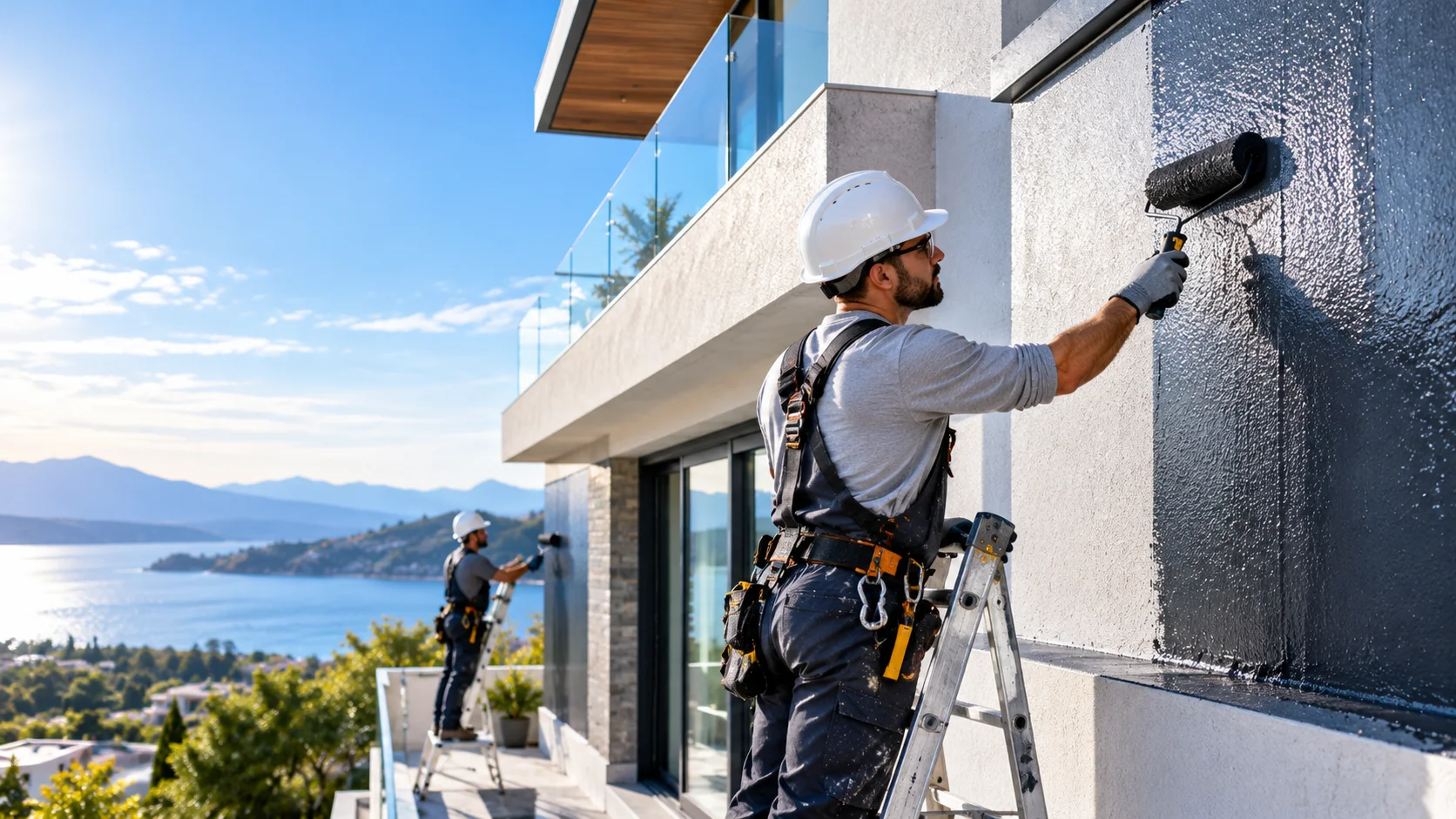
- Step 4: Apply the waterproofing. A rubberized membrane or sprayed coating goes on the wall, with extra material at corners and the footing joint.
- Step 5: Add drainage board. A dimpled protection board covers the membrane and lets water run down to the drain, instead of building up against the wall.
- Step 6: Install or replace the footing drain. Perforated pipe in washed gravel is laid at the base of the footing and sloped to daylight or a sump.
- Step 7: Backfill and grade. Free-draining backfill goes in, and the soil is graded to slope away from the house.
Where digging is not practical, we use interior drainage and wall sealing instead. Either approach is built to move water away from the foundation and keep it from soaking in.
Materials matter, and so does what sits behind them. A thin spray-on damp-proof coating will not hold back water under pressure, and a membrane that is not protected by a drainage board can be punctured during backfill. We use rubberized membranes rated for below-grade use and protect them before the trench is closed, so the seal that goes on is the seal that stays.
The work is also about what you do not see. Old drain pipe that looks intact may be crushed ten feet away. Cracks that were patched with ordinary mortar may have reopened. We check the full length of the wall and the drain, not only the spot where the water shows.
Signs you need foundation waterproofing
- Damp or wet foundation walls after rain, inside or out
- Cracks in the wall that leak or show water stains
- White, powdery efflorescence on concrete or block
- Musty smell in the basement or crawl space
- Peeling or flaking paint near the base of the wall
- Pooling water near the foundation after storms
- Soil that slopes toward the house or downspouts that drain against it
- Rust on steel or corrosion on utilities near the wall
What affects the cost of foundation waterproofing
Foundation waterproofing ranges widely, and a fair price depends on the house. The factors that matter are:
- Wall length and depth: Taller, longer foundations need more material and more excavation.
- Approach: Interior drainage, exterior membrane, or both.
- Access: Decks, patios, landscaping and utilities along the wall add work.
- Soil and water: Heavy clay and a high water table call for a stronger drain and pump.
- Existing condition: Cracks, failed drains and past repairs have to be addressed first.
For exact pricing on your foundation, call (971) 772-3963.
When exterior waterproofing is the better fit
Foundation waterproofing is the broad category: any work that seals and drains the foundation. If the wall itself needs a new membrane and the footing drain has failed, the work is done from the outside. That is exterior waterproofing, where we excavate, seal the wall and lay a new perimeter drain.
It is the most thorough fix because it stops water before it reaches the concrete. It also needs access around the house. If a deck, patio or neighbor’s fence is in the way, an interior system may be the practical answer. We tell you which one fits your foundation and why.
Why acting before the next rainy season matters
A foundation that is wet every winter does not get better on its own. Water moving through concrete carries lime and weakens the surface. It rusts the reinforcing steel inside the wall, and rust expands and cracks the concrete from within.
Wet soil also pushes harder as it gets heavier. Over years, saturated clay can bow a block wall inward or open a horizontal crack, and structural repair is much more expensive than waterproofing.
Inside the house, a damp foundation feeds mold and humidity. Doing the work in late summer gets the wall sealed and draining before the first storms, and the soil is dry enough to dig.
Foundation waterproofing FAQ
What is the difference between foundation waterproofing and damp-proofing?
Damp-proofing is a thin coating that resists moisture from the soil. Waterproofing is a thicker membrane that holds back water under pressure. Most older homes only have damp-proofing, if anything.
Can foundation waterproofing be done from the inside?
Yes. Interior drains and sealants manage water that reaches the wall. Interior work does not stop water from entering the concrete, but it keeps it from reaching your living space.
Does waterproofing fix foundation cracks?
Waterproofing handles the water. Cracks are repaired separately by injection, and we usually do the crack repair first.
How long does foundation waterproofing last?
The lifespan depends on the materials, the installation and how well the drain is maintained. A properly installed membrane and drain system protects the foundation for many years.
Does it add value to a house?
A dry basement or crawl space is easier to sell, finish and insure. Buyers and inspectors look for water stains and efflorescence, and a documented drainage system answers those questions.
What should I do while waiting for the work?
Extend downspouts away from the house, clear gutters and keep soil sloped away from the wall. Move stored items off the floor. These steps reduce water at the foundation until the system is installed.
Will it stop my basement from smelling musty?
Often, yes. The smell usually comes from damp walls and floors. Once water is managed, the basement dries and the smell fades.
Call (971) 772-3963 and tell us about your foundation. We will take a look and explain what it needs.
Where we do this work
Need foundation waterproofing?
Office hours Mon–Fri 8 AM–5 PM. Emergency calls 24/7.