
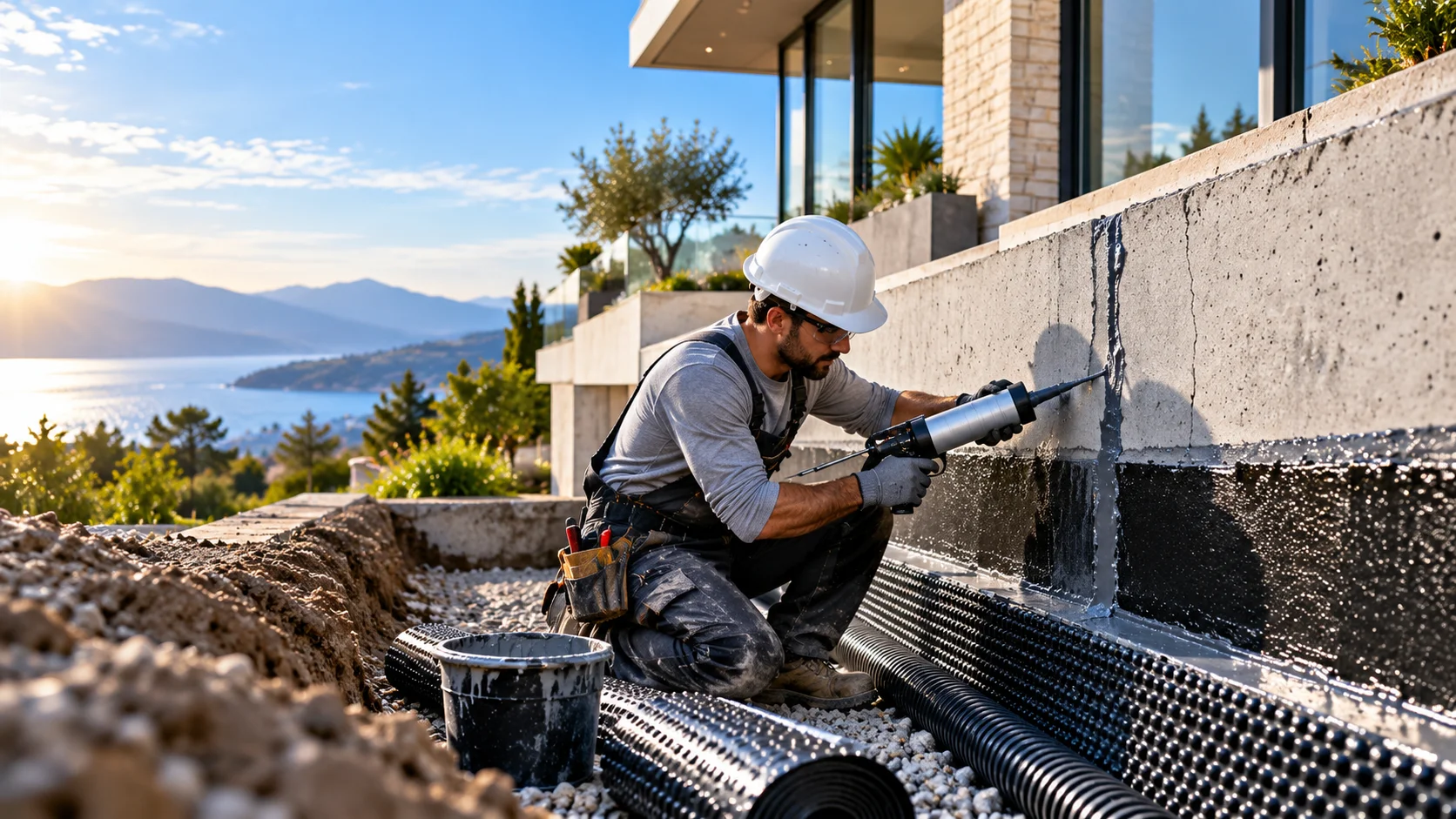
Crawl Space and Basement Waterproofing for Vancouver Homes
Basement, crawl space and foundation waterproofing for Vancouver homes.
Call (971) 772-3963Where Water Gets In Around Vancouver
Across the Interstate Bridge, the Columbia River sets the water table for much of Vancouver, and the ground within a few miles of the river holds groundwater close to the surface for most of the winter. Homes there sit on soil that is saturated long before the river rises.
Clark County soils vary, but many neighborhoods have silty clay that drains slowly, and some low areas near Vancouver Lake and the river bottoms stay wet into summer. The housing is a mix: older neighborhoods with 1950s and 1960s homes on basements or crawl spaces, and newer subdivisions with slab or partial basement foundations.
Older homes often have failed drains and no sealed walls. Newer ones may be too new for drains to have clogged, but they can have grading problems, builder-grade drainage and sump pumps that were sized for average rain. When Pacific Northwest rain runs for days, both types see water.
Older basements often have an unfinished side and a finished side, and the water tends to find the unfinished side first. Homeowners store boxes there and notice the damp only when something is ruined. A musty smell in the stairwell is usually the first clue, and by the time a wet basement shows on the floor, the wall has been damp for a season.
Timing the Work Before the Wet Season
The first fall storms soak ground that has been dry all summer. By December, the soil near the river and the lake is saturated, and groundwater has climbed into the zone where basements and crawl spaces sit.
In January and February, the Columbia runs high, and low-lying neighborhoods see the water table at its peak. Basements show seepage at the floor joint, and crawl spaces hold standing water or damp soil. Sump pumps run for long stretches.
The wet continues into spring. Homes with damp crawl spaces carry that moisture into the framing and insulation, and basements keep a musty smell that returns every year. Summer is the right time to fix it, while the ground is dry.
After a storm, groundwater does not drop quickly. Near the river and lake, the table follows the water level and stays high for weeks, and silty clay holds moisture long after the rain stops. A crawl space that was damp in January is rarely dry in March, and a basement that seeps in a wet week can stay clammy through a dry one.
A site visit covers the foundation walls, the floor joint, the sump and the grading around the house, the downspouts, and any crawl space. We ask when the water appears, and we measure it, not just look at it. A pattern that follows heavy rain points to drainage. A pattern that follows the river and the season points to groundwater. Each leads to a different fix.
Crawl space homes need a separate look. In the low ground near the river, standing water under the house is common in January and February, even in houses that were dry in fall. The water rises through the soil, collects in the lowest corner and stays until it drains or a pump moves it. Insulation that touches that water wicks it upward, and within a season the subfloor above it is damp.
The fix has an order. Water comes out first, with drain pipe and a pump. The soil is then covered with a heavy liner, the vents are closed and a dehumidifier holds the humidity down. Skipping the first step is the most common reason a crawl space "fix" fails.
Basement & Crawl Space Waterproofing Services in Vancouver
Basement Waterproofing
A drain, sealed sump and backup power for basements near the river water table.
Basement Leak Repair
Fast sealing for weeping walls while the groundwater stays high.
Crawl Space Waterproofing
Perimeter drain and sump for crawl spaces at or below the river water table.
Crawl Space Encapsulation
Raised equipment and a sealed liner for floodplain crawl spaces.
Crawl Space Vapor Barrier Installation
Reinforced barrier over bare soil once the water has drained.
Foundation Waterproofing
Seal and drain foundations that sit close to the water table.
Exterior Waterproofing
Outside membrane and drain for walls that stay wet for months.
Foundation Crack Repair
Flexible injection for cracks that weep when groundwater rises.
French Drain Installation
A drain to a pump or dry well where the ground has no fall.
Sump Pump Installation
A pump on its own circuit with backup for river-season flow.
Common Waterproofing Jobs on These Streets
Four services come up more than any others in Clark County.
Basement Waterproofing
Older homes with basements near the river often need interior drain tile and a sump to handle seepage. We cut the slab edge, lay drain pipe in gravel and tie it to a sealed basin. See basement waterproofing in Vancouver.
Sump Pump Installation
High groundwater is the main issue, and a properly sized pump with a battery backup is the answer. Sump pump installation here includes replacing undersized or failing pumps as well as adding new ones.
Crawl Space Encapsulation
Many homes sit on crawl spaces that stay damp all winter. Sealing the floor and walls with a liner and adding a dehumidifier stops the moisture and the musty smell. Read about crawl space encapsulation, and consider a crawl space vapor barrier where the space is otherwise dry.
French Drain Installation
In newer subdivisions with flat lots, a French drain collects yard water and carries it to a legal discharge point, away from the foundation. Our French drain installation page explains the steps.
Where walls leak at a crack, foundation crack repair by injection seals a leaking basement without excavation. Discharge rules differ by jurisdiction, so we check local requirements before we lay any pump line, and a sump pump line cannot simply run to the street.
Newer homes deserve a note of their own. A house built in the last twenty years may have a sump pit that was cut for a code requirement and has never run, a downspout tied into a buried line that nobody has checked, and a crawl space with a thin sheet of plastic that was never sealed. None of that shows until a wet winter finds it. We look at those details on newer homes too, because the fix is usually small when it is found early.
Neighborhoods We Cover in Vancouver
Jobs in this part of Washington range from the neighborhoods near Esther Short Park and the waterfront to Hazel Dell, the Fourth Plain corridor and the blocks near Vancouver Lake. Homes near the river and the lake see the highest groundwater, and the older neighborhoods north of downtown have the aging basements and crawl spaces.
Our waterproofing services in Vancouver follow the same approach on both sides of the river, with a Vancouver waterproofing contractor's attention to local soil and local rules. Newer subdivisions on flat lots often need a pump with a battery backup more than any other single upgrade.
Close by, we also cover Minnehaha and nearby Camas, where soil conditions and housing styles are similar.
Another useful habit for owners here is a fall walk-around. Check that downspouts reach several feet beyond the foundation, that gutters are clear, that the soil slopes away from the house, and that the sump pump runs when you pour a bucket of water into the basin. Those ten minutes catch many of the problems that become January emergencies. If the pump does not start, or the basin never empties, call before the first big storm, not after it.
How Basement Waterproofing Works in Vancouver
Call from either side of the river
Tell us your neighborhood and where the water shows up.
We measure the water
We check the walls, the sump, the crawl space and local discharge requirements.
We fix and test
Drains, pumps or liners go in, tested under load, with the pump on its own circuit.
How Much Does Waterproofing Cost in Vancouver?
What waterproofing costs in Vancouver depends on how high the groundwater rises and how large the pump has to be. These are typical ranges for the jobs we do most here.
| Service | Typical range |
|---|---|
| Crawl Space Waterproofing | $3,000 – $9,000 |
| Sump Pump Installation | $1,200 – $4,500 |
| Basement Waterproofing | $4,000 – $12,000 |
| Crawl Space Encapsulation | $4,000 – $12,000 |
River-area groundwater and local discharge rules can add pump and backup costs, which we price before work starts.
These are estimates, not quotes. For an exact price on your home, call (971) 772-3963 and we will schedule a site visit. You can also see pricing for every service.
Common Questions About Wet Basements
Does being near the Columbia River mean my basement will be wet?
It means the groundwater is higher. Homes with basements near the river are more likely to see seepage, and a sump pump and drain system keep it controlled.
Do newer subdivisions need waterproofing?
Some do. Flat lots, builder-grade drainage and poor grading can send water toward the foundation. A French drain or sump pump often fixes it.
Is a damp crawl space a big deal?
It can be. Moisture grows mold and rot in the framing and makes the house smell musty. Sealing and humidity control stop it.
Do you work in Washington as well as Oregon?
Yes. We serve Vancouver and nearby Clark County areas within about 20 miles of Portland.
Call (971) 772-3963 about water in your Clark County home. Tell us what you are seeing and we will arrange a visit.
Water Coming In? Call Now.
Office hours Mon–Fri 8 AM–5 PM. Emergency calls 24/7.