
Waterproofing questions, answered
Basements, crawl spaces, foundations, drains and cost, in plain language.
Call (971) 772-3963Basements
Why does my Portland basement leak only in winter?
Rain from October to May saturates the clay and silt around your foundation. The soil cannot drain fast enough, so water builds pressure against the wall and floor joint. In summer the ground dries and the pressure drops, which is why the problem seems to disappear until the rain returns.
What is the white powder on my basement walls?
That is efflorescence, mineral salt left behind when water moves through concrete or block and evaporates. It is not mold, but it proves water is passing through the wall. Brushing it off does not fix the cause, and it will come back until the water is managed.
Can I paint over a damp basement wall?
Waterproof paint can slow minor dampness, but it does not stop water under pressure. It tends to blister and peel within a season or two. If water is reaching the wall, the fix is drainage or sealing at the source, not a coating on the surface.
Does a finished basement need to be torn out to waterproof it?
Usually only along the walls where the drain goes. Interior drains are installed at the slab edge, so we remove the bottom section of wall finish and some flooring, install the system and patch. Open or unfinished basements are quicker.
Is a dehumidifier enough for a damp basement?
A dehumidifier pulls moisture from the air. It does not stop water coming through walls or floors. If you see staining, pooling or efflorescence, the dehumidifier will run constantly and never catch up. Fix the water entry first, then use a dehumidifier for what remains.
Crawl spaces
Why does my crawl space smell musty?
Damp soil gives off moisture all winter, and wood framing and insulation absorb it. That moisture grows mold and mildew, and warm air rising through your house pulls the smell upstairs. A musty smell means the crawl space is wetter than it should be.
What is the difference between a vapor barrier and encapsulation?
A vapor barrier covers the soil floor to slow ground moisture. Encapsulation covers the floor and walls, seals the vents and adds humidity control. A vapor barrier suits a mostly dry crawl space. Encapsulation suits one that stays humid, smells or has damp insulation.
Should I close my crawl space vents?
In a sealed, encapsulated crawl space, yes. In Portland’s wet climate, open vents mostly let humid outside air in. Closing vents without a liner and humidity control can trap moisture, so the vents are closed as part of a full system, not on their own.
Can a crawl space with standing water be encapsulated?
Not until the water is handled. Standing water needs perimeter drainage and usually a sump pump. Once the space drains and the soil is stable, we can line it. Sealing over water only traps the problem under plastic.
Does wet insulation need to be replaced?
Usually, yes. Fiberglass that has been wet, sagging or moldy no longer insulates and can hold moisture against the subfloor. We remove it, fix the moisture source and, if you want, install insulation suited to a sealed crawl space.
Foundations and cracks
Are foundation cracks serious?
Hairline vertical cracks are common as concrete cures and settles. Cracks that leak, widen, run horizontally or show stair-step patterns in block deserve attention. Horizontal cracks can mean soil pressure is pushing the wall inward, and that needs evaluation sooner rather than later.
How are leaking foundation cracks repaired?
We inject epoxy or polyurethane into the crack from the interior, filling it through the thickness of the wall. Epoxy bonds the concrete back together, and polyurethane stays flexible and stops water. We choose based on whether the crack is moving.
What is the difference between interior and exterior waterproofing?
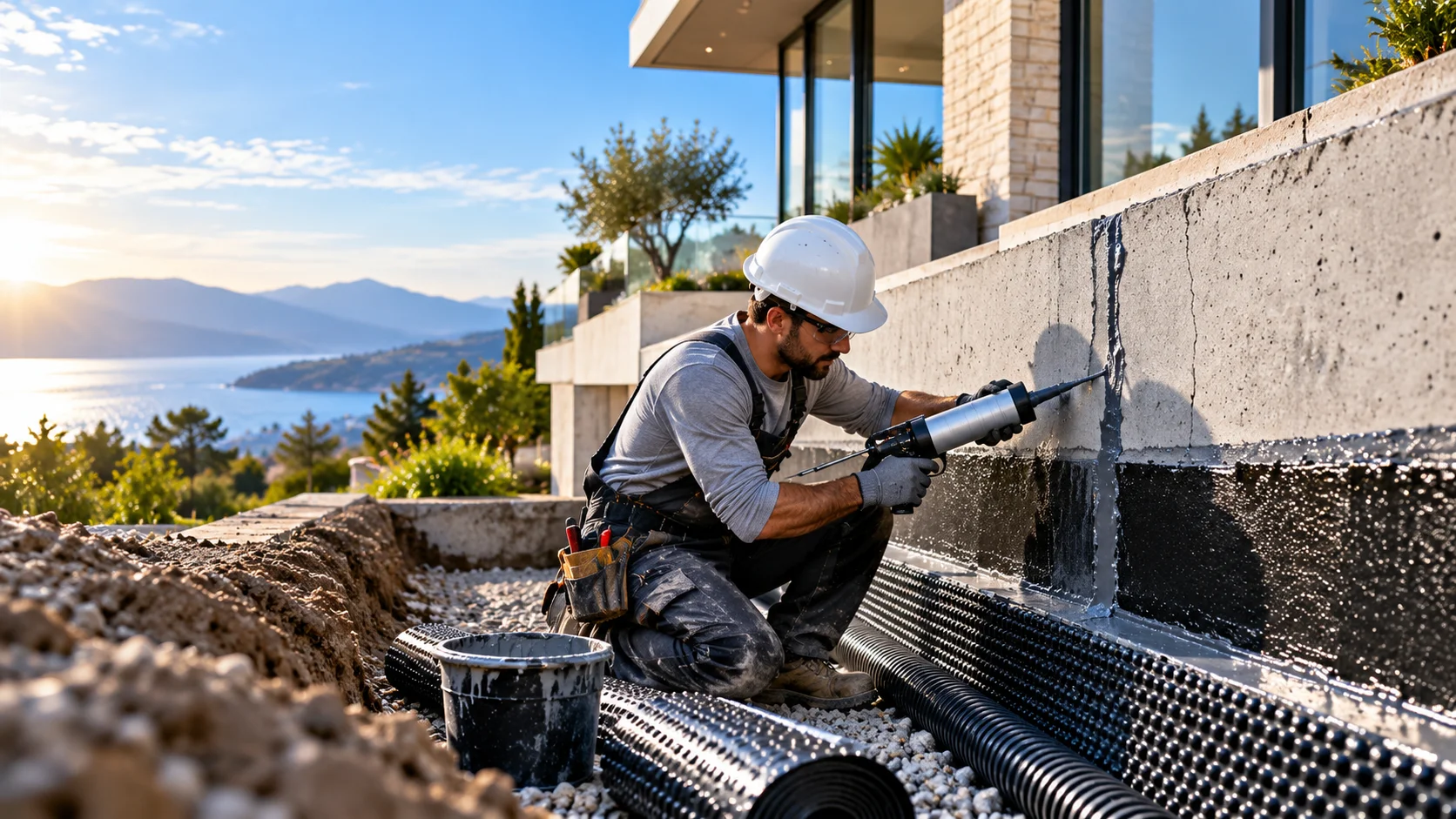
Interior systems collect water that reaches the foundation and pump it away. Exterior waterproofing excavates, seals the wall and installs a new drain outside, stopping water before it touches the concrete. Exterior costs more and needs access, so many homes use interior systems.
Drains and pumps
What does a French drain do?
A French drain is a sloped trench with perforated pipe wrapped in gravel. Water in the soil enters the pipe and runs to a safe discharge point. It suits soggy yards, runoff headed toward the house and hillside lots where water collects at the foundation.
Do I need a sump pump if I never had water before?
Not necessarily. A sump pump is needed where groundwater rises to the slab or a drain system collects water that must be moved. If your basement or crawl space has been dry through several wet seasons, a pump may not be needed.
How long does a sump pump last?
Most last several years, and life depends on how often they run. A pump that runs a lot in wet winters wears faster. A battery backup keeps the pump working during storms when the power goes out, which is when it is needed most.
Cost and scheduling
How much does waterproofing cost in Portland?
It depends on the size of the area, access, soil, water volume and the type of system. A single leak repair and a full perimeter drain are very different jobs. Call (971) 772-3963 and we will scope your job and give you exact pricing.
When is the best time of year to waterproof?
Late summer and early fall. Soil is dry, excavation goes faster and you are protected before the October rain. We also work in winter, especially for emergencies, but wet ground and weather can slow outdoor work.
Do you handle emergencies?
Yes. Emergency calls are taken 24/7. Office hours are Monday to Friday, 8 AM to 5 PM. If water is entering your home now, call (971) 772-3963 and tell us what is happening.
Which cities do you serve?
We serve Portland and areas within about 20 miles, including Beaverton, Tigard, Lake Oswego, Milwaukie, Gresham, Aloha, West Linn and Vancouver, WA. See our service areas for the full list of cities.