
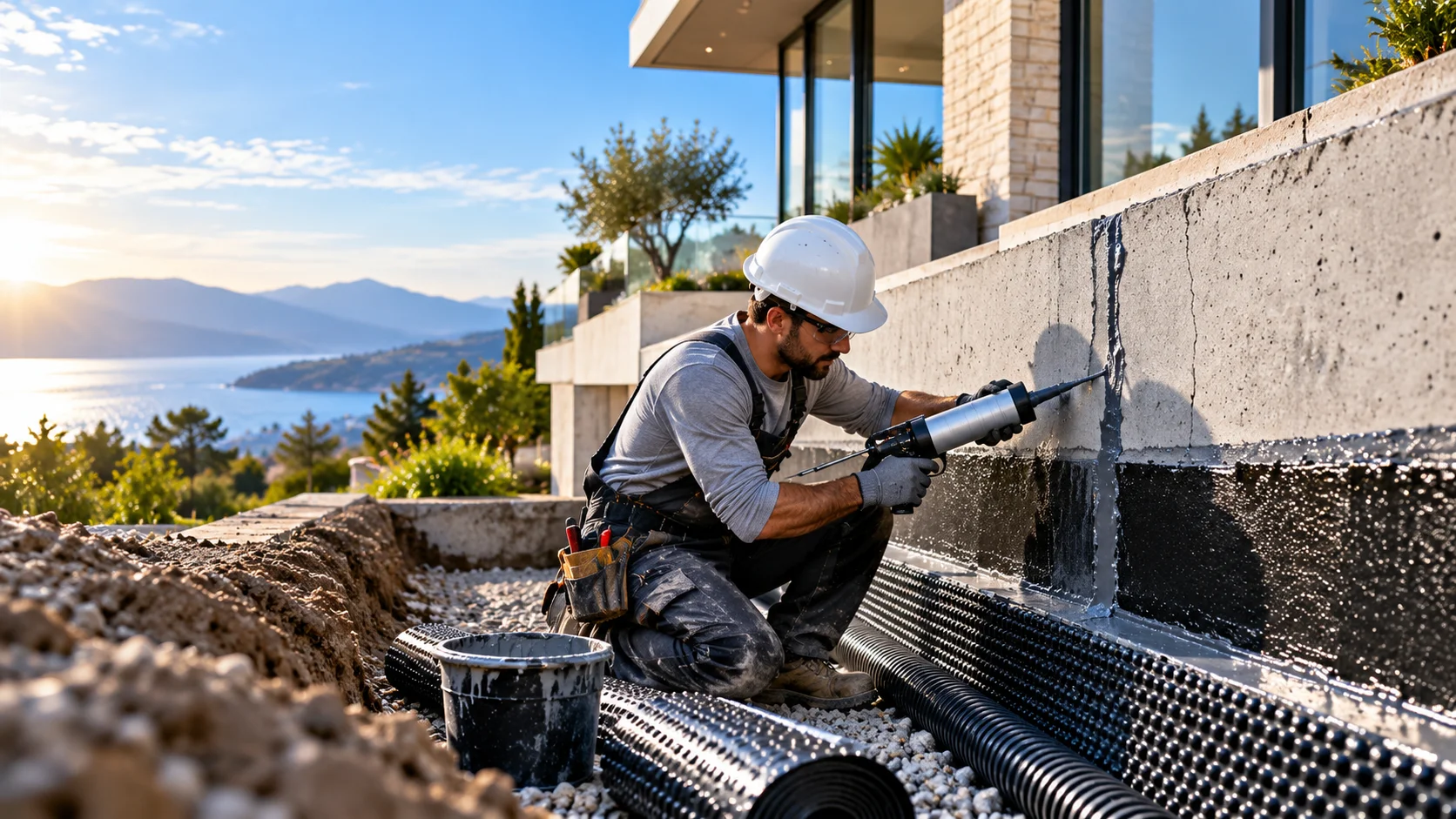
Crawl Space Waterproofing for Standing Water Under the House
Perimeter drains, grading and pumps that move winter water out from under your floors.
Call (971) 772-3963Standing water under a Portland house
Lift the access hatch in January and you may find a shallow pond under the house, soggy soil, insulation hanging in wet strips and a smell that hits you at the opening. That is a crawl space with a water problem, and the house above it is paying for it.
Portland rain runs from October to May. The soil in much of the area is clay and silt, which takes water slowly and holds it. When the ground around a house is full, the groundwater level rises up to or above the crawl space floor. Water seeps in through the soil, through the foundation walls and along the footing.
Flat lots make it worse, because rainwater has no slope to follow away from the house. Downspouts that discharge beside the foundation, gutters that overflow and yard grading that tilts toward the house all send extra water to the same place. Crawl space waterproofing deals with all of it: the water already under the house and the water that is going to arrive next.
For a Portland homeowner, the sign is often a sound. After a rain, a sump pump that has never run suddenly kicks on, or a plumber crawling under the house comes back out wet to the knees. Portland houses on clay do not hand out gentle warnings.
How we handle crawl space waterproofing, step by step
The goal is to give water a path out, so it never has time to sit.
- Step 1: Inspect and measure. We check water depth, where it enters, the condition of the walls and the soil, and the outside grading and downspouts.
- Step 2: Clear the space. Wet insulation, debris and loose material are removed so we can work on a clean surface.
- Step 3: Fix the outside first. Downspouts are extended away from the house, and grading problems are noted or corrected so surface water stops heading under the structure.
- Step 4: Install perimeter drainage. Perforated pipe in washed gravel is laid along the inside of the footing, sloped toward a low point.
- Step 5: Set the sump. A sealed basin goes in at the low point with a pump, check valve and a discharge line that carries water well away from the house.
- Step 6: Level and cover. The floor is graded to drain toward the pipe and covered with gravel or a ground cover.
- Step 7: Test. We run water into the system and watch it flow to the sump and out the discharge line.
A crawl space that drains is the base for everything else, including sealing and humidity control. Without it, a liner or dehumidifier is working against standing water.
Pumps get the attention, but the pipe does the work. A pump only moves water that reaches it, and a perimeter drain gathers water from the whole footing line and delivers it to the basin. A good crawl space waterproofing job is mostly about where the pipe goes, how it is sloped and what it is bedded in.
Signs you need crawl space waterproofing
- Standing water or puddles in the crawl space after rain
- Soil that is soft, muddy or shiny from wet
- Water stains or tide lines on the foundation walls
- Wet, sagging or moldy insulation between the floor joists
- A musty smell inside the house that is strongest near floor vents
- Rust on nails, ductwork or metal hangers under the house
- Cold, soft or bouncy floors above the crawl space
- A sump pump in the crawl space that runs constantly or is not working
What affects the cost of crawl space waterproofing
The price depends on how much water you have and how hard it is to work in the space. These are the main factors:
- Crawl space size: The perimeter length sets how much drain pipe and gravel are needed.
- Access: A small hatch and 18 inches of clearance make every task slower.
- Soil and water volume: Heavy clay and a high water table call for more drainage and a stronger pump.
- System type: Drain and sump together, a sump alone, or exterior drainage work.
- Discharge distance: A longer run to daylight or a dry well adds pipe and labor.
For exact pricing on your crawl space, call (971) 772-3963.
When crawl space encapsulation is the better fit
Drainage handles liquid water. It does not stop the water vapor that rises from damp soil, and it does not seal out humid air. If your crawl space is not holding water but is damp, musty and humid, you may need crawl space encapsulation instead, or after drainage is in place.
The two jobs fit together. Waterproofing removes the water, and encapsulation seals the space so what is left in the soil cannot reach your home. If you have standing water, drainage comes first. If you have no standing water but a smell and damp insulation, sealing may be all you need.
Why acting before the next rainy season matters
Water under a house works slowly and quietly. A crawl space that fills every winter keeps the framing and subfloor damp for months, and wood that stays above about 20 percent moisture invites mold and rot.
Wet insulation falls out of the joists and stops working, so your floors get colder and the furnace runs harder. Ducts in a wet crawl space sweat and rust. Pests move into the dark, damp space and make nests in what is left of the insulation.
Structural problems follow. Soft or rotted joists and sill plates are carpentry repairs, not drainage repairs. Doing the work in late summer means you are dry before the rain starts again, and the crawl space is easy to work in.
Crawl space waterproofing FAQ
Why is there water in my crawl space when it has not rained for days?
Clay soil releases water slowly, and the groundwater level can stay high for days or weeks after rain. Water keeps seeping in until the soil drains or a pump removes it.
Can I just run a sump pump without a drain?
A pump alone only works if water reaches it. In a crawl space, a perimeter drain brings water to the pump from around the whole footing, so the pump can remove it before it spreads across the floor.
Will waterproofing remove the musty smell?
Often it helps a lot, because standing water and wet soil are the source. For the best result, pair drainage with a sealed liner and humidity control.
Do I need to remove the insulation?
If it is wet, moldy or sagging, yes. It no longer insulates and can hold moisture against the floor. We can replace it after the space is dry.
How long does the work take?
Most drainage and sump installations take one to three days, depending on size, access and how much water is present.
How do I know if I need crawl space waterproofing or only a sealed liner?
If you see standing water, wet soil that is soft or shiny, or tide lines on the walls, you need drainage. If the soil is only damp and the space smells musty, a sealed liner may be enough. A visit settles it.
Call (971) 772-3963 and tell us what you see under your house. We will schedule a visit, look at the space and recommend a plan.
Where we do this work
Need crawl space waterproofing?
Office hours Mon–Fri 8 AM–5 PM. Emergency calls 24/7.