
Exterior Foundation Waterproofing and Perimeter Drains
We dig down, seal the wall and lay new drain pipe so water leaves before it reaches you.
Call (971) 772-3963Why water wins when it reaches the outside of the wall
Dig along a house in a wet January and you can see the problem. The soil next to the foundation is dark and mushy, the gravel at the footing is sitting in water, and the wall has a damp band that runs all the way to the top of the dirt. Everything the house does to keep dry inside depends on what happens out here.
Portland’s clay and silt soils hold water. From October to May the ground around a house is saturated, and the water has nowhere to go but sideways against the wall or down to the footing. If the footing drain is broken or was never installed, water collects at the base of the foundation and pushes through the wall, the cove joint or any crack.
Older drains are a big part of it. Clay tile and early perforated pipe silted up decades ago, and tree roots have worked into the joints. Roof water from downspouts often empties right beside the foundation. Exterior waterproofing replaces what failed: a sealed wall, a protective layer and a clean drain around the footing.
The ground around a Portland foundation is rarely just soil. After sixty years, it is soil, old gravel, a few pieces of broken tile and roots, and the wall behind it has often had the same few inches of damp-proofing since the day it was poured. Portland houses of that age were built for a different standard of dryness than the one we expect today.
How we handle exterior waterproofing, step by step
This is the full-depth approach. It takes longer than interior work, and it is the most thorough.
- Step 1: Locate and protect. We mark utilities, protect landscaping where we can and set up a path for soil.
- Step 2: Excavate to the footing. The soil is dug out along the wall, down to the bottom of the footing, with the sides sloped or shored for safety.
- Step 3: Clean and repair the wall. The wall is cleaned of soil and old coatings, and cracks and tie holes are repaired.
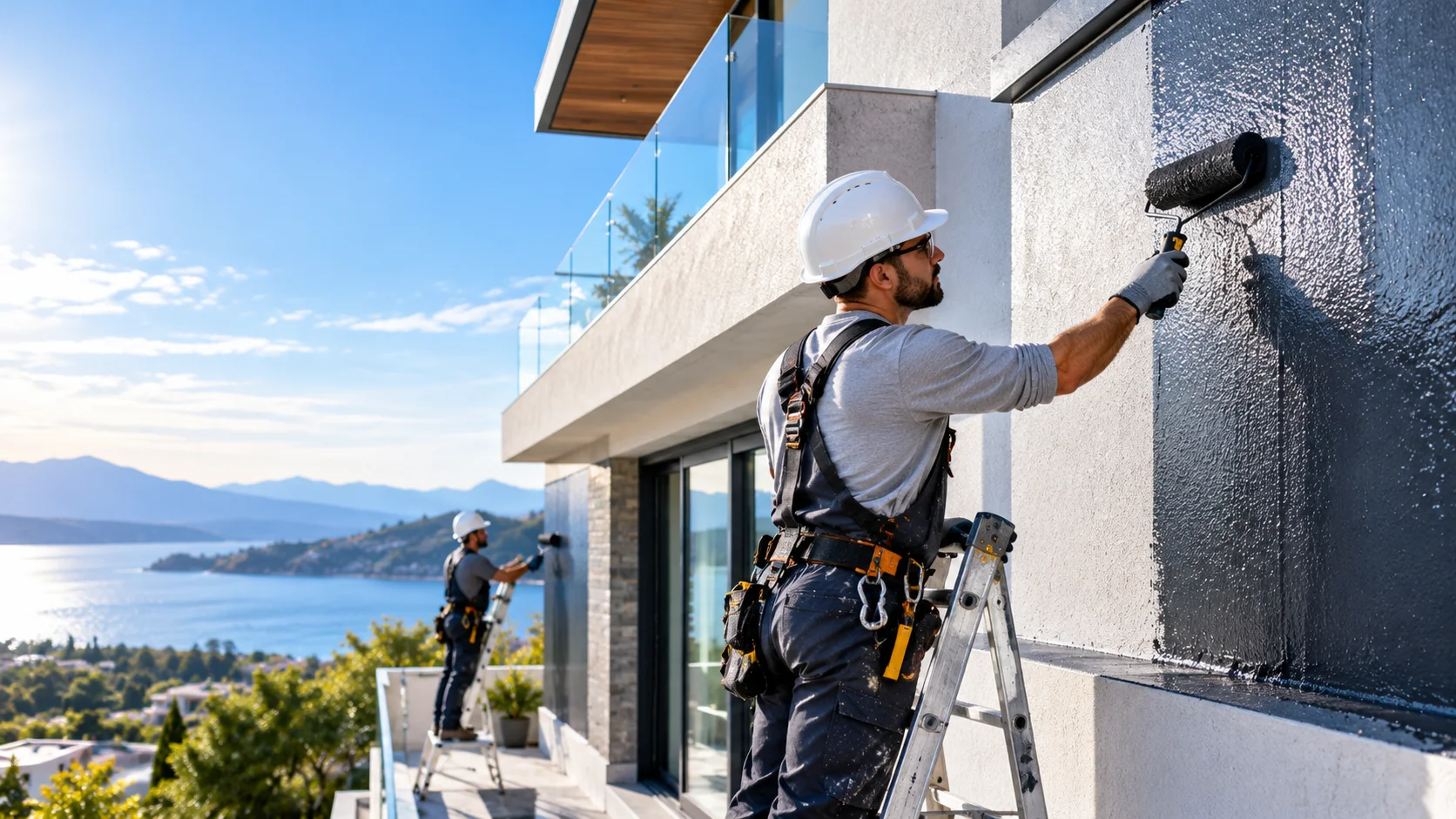
- Step 4: Apply the membrane. A rubberized waterproofing membrane is applied to the wall, with extra coverage at the footing joint and corners.
- Step 5: Add a drainage board. A dimpled protection board covers the membrane and gives water a path down to the drain.
- Step 6: Lay the perimeter drain. Perforated pipe in washed gravel goes alongside the footing, wrapped in filter fabric and sloped to a discharge point.
- Step 7: Backfill and grade. Clean backfill goes in, compacted in layers, and the surface is graded to slope away from the house.
Downspouts are connected to solid pipe that carries roof water away from the foundation, and we test the drain before covering it.
We also pay attention to what goes back in the trench. Free-draining backfill, not the clay that came out, goes against the wall, so the new membrane and drain are not buried in the same slow soil that caused the trouble. It is a quiet detail that decides how well the whole system works.
Signs you need exterior waterproofing
- Persistent dampness along the full length of a basement wall
- Water entering at the footing or cove joint in several places
- A failed or clogged footing drain, or no footing drain at all
- Foundation coating that has flaked or washed off
- Soil that stays soggy next to the house long after rain stops
- Horizontal cracks or a wall that is bowing inward
- Repeated interior repairs that have not held
- A home built before the 1970s with no modern waterproofing
What affects the cost of exterior waterproofing
Exterior waterproofing is a bigger project than most interior work, and several things set the price:
- Excavation depth and length: A deep basement wall means more digging, more material and more backfill.
- Access: Decks, patios, walkways, fences and landscaping in the way have to be removed or worked around.
- Soil conditions: Wet clay and rock slow the work and may require shoring.
- Membrane and drain system: Material choice and the length of drain pipe both matter.
- Restoration: Putting the yard, hardscape and grading back in order adds to the job.
For exact pricing on your home, call (971) 772-3963.
When foundation waterproofing is the better fit
Exterior excavation is one option under the larger heading of foundation waterproofing. If digging is not practical, because the wall is covered by a deck, a driveway or a neighbor’s property line, an interior system can protect the home instead. It collects water at the slab edge and moves it to a sump.
The question is whether the wall itself needs a new seal. If concrete is deteriorating or the footing drain has collapsed, the exterior route addresses the cause. If water is mostly coming up at the floor joint and the wall is sound, interior work may be enough. We look at the foundation and tell you what fits.
Why acting before the next rainy season matters
Exterior work is best done when the ground is dry. In late summer, trenches stay open, soil handles easily and the membrane cures properly before the first storm. In winter, water floods the excavation and adds days and cost.
Waiting also lets damage build. Water pressing on the wall carries away concrete surface, rusts steel and widens cracks. A failed footing drain lets soil wash into the pipe, and the drain collapses further.
Inside the house, damp walls feed mold and humidity. Fixing the outside before the next wet season stops all of that at the start.
Exterior waterproofing FAQ
How long does exterior waterproofing take?
A typical house takes several days to a couple of weeks, depending on how much wall is involved, how deep it is and what has to be removed and restored.
Will you have to dig up my landscaping?
The soil next to the wall has to come out, so plants and surfaces there are affected. We protect what we can and restore grading when the work is done. Replanting is usually up to the homeowner.
Is exterior waterproofing better than interior?
It stops water before it reaches the wall, so it is the most thorough fix. Interior systems manage water after it arrives. The right choice depends on access, budget and what is failing.
Do I also need a sump pump?
Not always. If the perimeter drain can run to daylight by gravity, no pump is needed. If it cannot, a sump pump moves water to the discharge point.
What about my downspouts?
We connect them to solid pipe that carries roof water well away from the foundation, so it does not overwhelm the new drain.
Will exterior work hurt my foundation or house?
No. We dig in sections, shore the sides when needed and keep the footing protected. The aim is to expose the wall, not undermine it. We check the footing as we go, and if we find problems, we tell you before continuing.
Is exterior work right for a Portland home with a deck or patio on the wall side?
It can be, but access matters. Sometimes the deck or patio has to be removed, and sometimes an interior system is the practical choice. We weigh both with you.
Call (971) 772-3963 and tell us about your foundation. We will come out, look at the wall and the soil and lay out the plan.
Where we do this work
Need exterior waterproofing?
Office hours Mon–Fri 8 AM–5 PM. Emergency calls 24/7.