
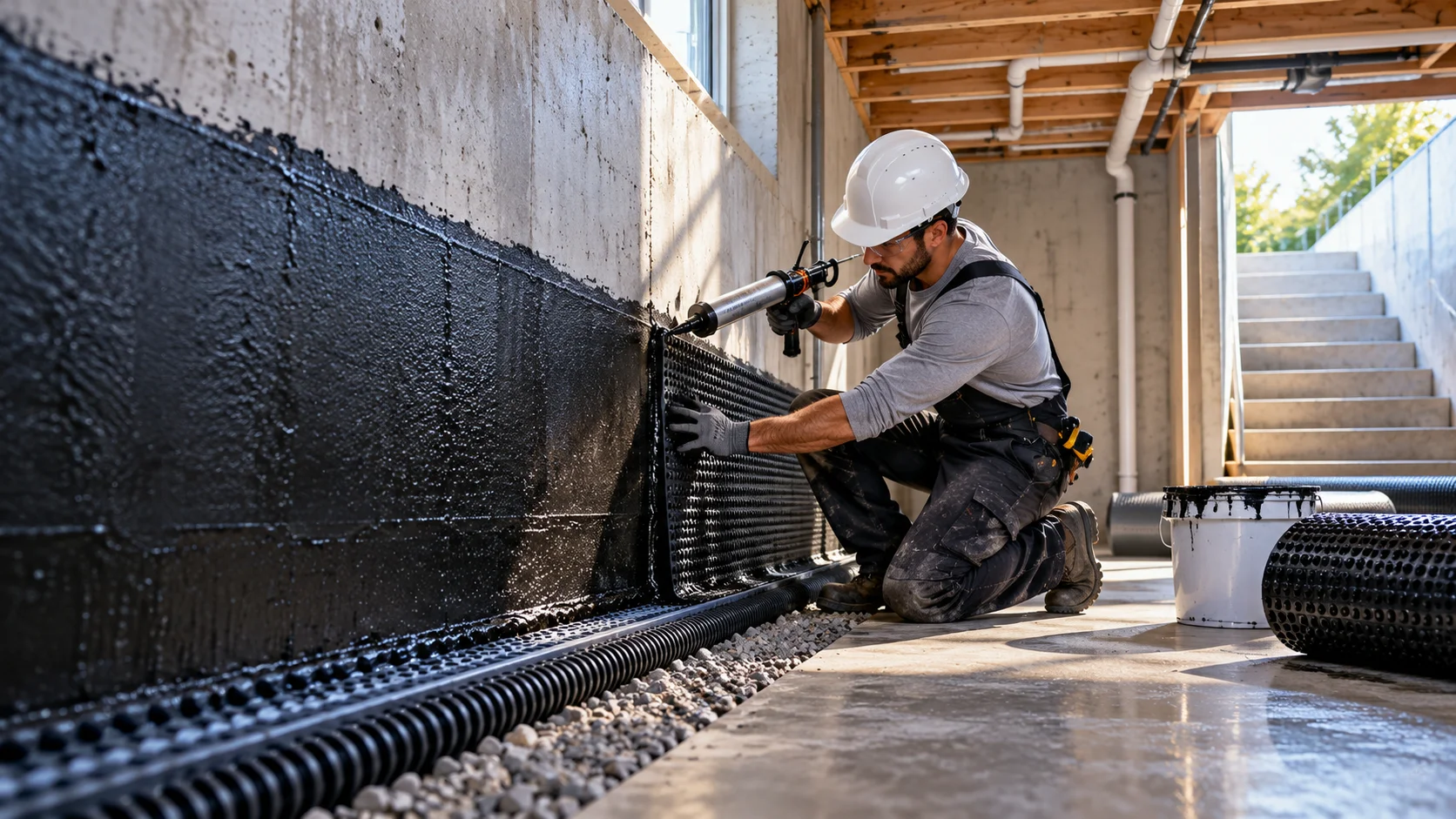
Crawl Space Encapsulation to Stop Moisture and Musty Air
A fully lined, conditioned crawl space keeps damp air from rising into your living area.
Call (971) 772-3963The problem: damp air rising from under your floors
If your floors feel cold and soft, your house smells like a cellar, or your insulation hangs down in wet clumps, the crawl space is the likely source. Portland homes built on crawl spaces breathe whatever is underneath them, and from October to May that air is wet.
The ground here is clay and silt. It holds water, and that water evaporates upward into the crawl space all winter. Vents built into the foundation were meant to let it out, but in our damp climate they often let more humid air in. Wood framing absorbs it. Wood that stays above roughly 20 percent moisture invites mold and rot.
Measured in a Portland crawl space in January, humidity often sits well above the 60 percent mark where mold starts to grow. A space that was dry in August can be damp by Thanksgiving, and the homeowner upstairs sees nothing until the smell shows up.
The air does not stay put either. Warm air rises through your house and pulls crawl space air up through gaps around pipes and floor edges. That is why a musty smell in the hallway can trace back to dirt under the house.
How we handle crawl space encapsulation, step by step
Encapsulation turns an open, ventilated crawl space into a sealed, dry one. Here is the order we work in.
- Step 1: Clear and inspect. We remove debris, old insulation and any wet material, and check for standing water, pipe leaks and rot.
- Step 2: Fix water first. If water enters from the ground or walls, we add drainage or a pump before anything gets sealed. Sealing a wet space only traps the problem.
- Step 3: Close the vents. Foundation vents are sealed so outside air stops flowing through.
- Step 4: Line the floor. A heavy reinforced liner is laid over the soil with overlapping seams taped and sealed.
- Step 5: Run it up the walls. The liner is carried up the foundation walls and fastened, then sealed at the sill and around posts and piers.
- Step 6: Control the air. A crawl space dehumidifier is installed to keep humidity in a safe range through the wet months.
- Step 7: Check the details. We look at seams, penetrations and the drain path, and confirm the system is holding.
Done right, the crawl space becomes part of the home’s air boundary instead of an open pit of wet soil.
What changes after encapsulation
The first thing most homeowners notice is the air. The musty smell that came up through the floor fades as the space dries out. Floors over the crawl space feel less cold in winter, because the space under them is no longer full of damp outside air.
Behind the scenes, the wood framing dries toward a stable moisture level, ducts stop sweating, and the space is no longer an easy home for rodents and insects. A sealed crawl space also gives you a clean, usable place to check pipes and wiring, instead of a muddy hole you avoid.
Plan on an annual look at the dehumidifier and the liner seams. The system needs little attention, but a quick check each fall keeps it working through Portland’s wet months.
Signs you need crawl space encapsulation
- A musty smell that rises through floors or vents
- Insulation sagging, wet or covered in dark spots
- Visible mold or white fuzzy growth on joists and subfloor
- Condensation on ductwork or pipes under the house
- Floors that feel cold, spongy or uneven
- Pests, such as rodents or insects, nesting under the house
- Wood framing that is dark, soft or cupping
- Humidity above 60 percent when measured in the crawl space
What affects the cost of crawl space encapsulation
The price depends on what is under your house, not just how big it is. These factors matter most:
- Size: The square footage of floor and linear feet of wall to cover.
- Access: A small hatch or a crawl space with only 18 inches of clearance takes longer to work in.
- Soil and water: Wet soil or standing water may call for drainage and a pump first.
- System type: Liner thickness, wall coverage, insulation and the size of the dehumidifier.
- Cleanup: Removing old insulation, debris or mold-damaged material adds time.
For exact pricing on your crawl space, call (971) 772-3963.
When a vapor barrier alone is the better fit
Crawl space encapsulation is the more complete job, but it is not always what a crawl space needs. If the space is dry apart from moisture rising off bare soil, and the walls and vents are in good shape, a ground-cover crawl space vapor barrier installation may do the work for less.
A vapor barrier covers the floor. Encapsulation covers the floor and the walls, closes the vents and adds humidity control. If you have a musty smell, damp insulation or a humid crawl space even with a barrier in place, you likely need the full system. We look at the space before recommending either one.
Why acting before the next rainy season matters
A crawl space is out of sight, so it gets ignored until something shows upstairs. In Portland, that usually means a smell in January or a sagging floor by spring. By then the damage has usually been going for a while.
Moisture is the starting point. Damp wood grows mold, and mold spreads across joists and subfloor through the winter. Once framing starts to soften, the repair is no longer a liner. It is carpentry.
The cost shows up in other ways, too. Wet insulation stops working, so your heating system runs harder. Ducts in a damp crawl space sweat and rust. Pests move into the dark, wet space. Sealing the crawl space in late summer or early fall means it is dry and stable before the October rain starts the cycle again.
Waiting also narrows your choices. A crawl space with only damp soil can often be lined and dried in a few days. One with standing water, soft framing or active mold needs more work before it can be sealed, and that work costs more the longer the moisture sits. If you are a Portland homeowner who has noticed any of the signs above, a visit now is cheaper than one in February.
Crawl space encapsulation FAQ
Is crawl space encapsulation worth it in Portland?
For many homes, yes. Our long, wet winters keep crawl spaces humid for seven months of the year, and crawl space encapsulation is built for exactly that. It cuts moisture, mold risk and the smell that travels into the living space.
Do I need to seal the vents?
In an encapsulated space, yes. Open vents let wet outside air in and defeat the dehumidifier. Sealed vents, a lined floor and walls and controlled humidity work together.
Will encapsulation fix a crawl space with standing water?
Not by itself. Standing water needs drainage and usually a pump first. We handle the water problem before we seal anything over it.
How long does encapsulation take?
Most jobs run two to four days once work starts, and the size of the space, the access hatch and the amount of cleanup set the pace. A crawl space that needs drainage first will run longer.
Can I do it myself with plastic sheeting?
You can lay plastic, but thin sheeting tears easily, leaves open seams and does nothing about walls, vents or humidity. A sealed, reinforced liner and a dehumidifier handle those details, and that is what keeps the space dry.
Call (971) 772-3963 and tell us what you see under your house. We will come out, look at the space and recommend the right level of work.
Where we do this work
Need crawl space encapsulation?
Office hours Mon–Fri 8 AM–5 PM. Emergency calls 24/7.