
Basement Waterproofing Services for Wet, Leaking Basements
Interior drainage, wall sealing and sump systems built for clay soil and months of rain.
Call (971) 772-3963Why basements take on water in Portland homes
A damp stripe along the bottom of a basement wall, a musty smell that returns every November, a white crust on the block: all of it comes from water that has been sitting outside your foundation for weeks. Portland gets most of its rain between October and May, and the ground around a house stays saturated for months at a stretch.
Much of the Portland area sits on clay and silt. Both drain slowly. Rain soaks in beside the house, has nowhere to go, and builds pressure against the wall. Concrete is porous, so that pressure pushes water through the wall itself, through the joint where the wall meets the floor, and through any crack that has opened over the years.
Age makes it worse. Many older houses were built with clay tile footing drains that have since crushed, silted up or filled with roots. The drain that once carried water away now sits full, and the water takes the easiest route left: into your basement. Basement waterproofing fixes that route, not just the wet spot you can see.
How we handle basement waterproofing, step by step
Every basement is different, but the work follows the same order. Here is what happens on a typical interior job.
- Step 1: Trace the water. We check the walls, the cove joint, the floor slab, window wells and downspout discharge to find where water enters and why.
- Step 2: Open the floor edge. We cut a channel in the slab along the wall and remove the concrete and the soil beneath it to expose the footing.
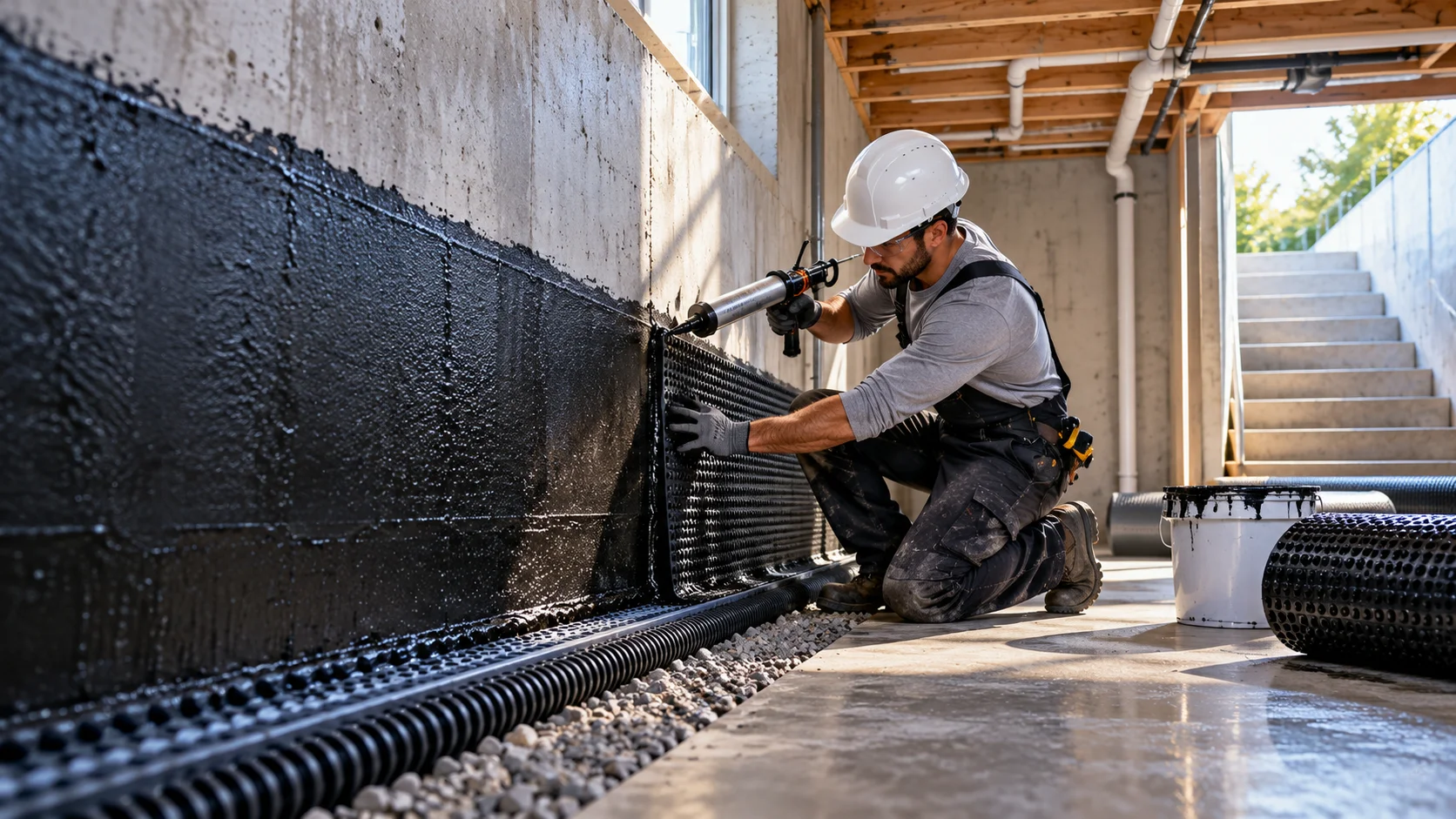
- Step 3: Lay the drain. Perforated drain pipe goes into a bed of washed gravel beside the footing, sloped toward the sump basin.
- Step 4: Cover the wall. A dimpled drainage membrane is fastened to the lower wall so any water that comes through runs down behind it into the drain, not across your floor.
- Step 5: Set the sump. A sealed basin goes in at the low point, with a pump, a check valve and a discharge line that carries water well away from the house.
- Step 6: Patch and finish. The slab is patched with new concrete, and cracks or tie holes that leak are sealed.
- Step 7: Test it. We run water through the system and watch the pump cycle before we call the job done.
The result is a drainage path inside the wall line that catches water and moves it out, so it never reaches finished flooring or stored belongings.
Signs you need basement waterproofing
Some signs are loud. Others hide behind drywall for years. If you see any of these, water is getting in:
- Water pooling along the wall base or at the cove joint after heavy rain
- A musty smell that gets stronger in fall and winter
- White, chalky mineral deposits on concrete or block walls
- Peeling paint, bubbling drywall or dark stains low on the wall
- Horizontal cracks or stair-step cracks in block walls
- Floors that feel damp, or carpet that never fully dries
- Rust on the bottom of furnace, water heater or support posts
- A sump pump that runs constantly, or no sump at all in a basement that stays wet
What affects the cost of basement waterproofing
No two basements price the same, and a number quoted without seeing the house is a guess. These are the factors that move the price:
- Size: The linear feet of wall that needs a drain, and the total square footage of the floor.
- Access: Finished walls, stored items, tight stairs or low ceilings slow the work.
- Soil and water volume: Heavy clay and a high water table call for a larger system and a stronger pump.
- System type: Interior drain only, drain plus wall membrane, or a full exterior approach.
- Existing conditions: Cracked slabs, failed old drains and a missing sump add steps.
For exact pricing on your home, call (971) 772-3963.
When basement leak repair is the better fit
Not every wet basement needs a full drainage system. If water comes in at one crack, one pipe penetration or one window well, and the rest of the wall stays dry, a targeted fix may be enough. That is a basement leak repair job.
The deciding question is how much of the basement is wet and how often. A single leak that shows up only in the heaviest storms often responds to sealing. Water along several walls, or water every time it rains for a week, points to a drainage problem that sealing alone will not hold back. When you call, describe where and when water appears and we will tell you which job you are looking at.
Why acting before the next rainy season matters
Water that enters a basement does not stay a small problem. Each wet season drives it further into the concrete, widens cracks and leaves the wall damp long after the rain stops.
Mold needs only moisture and a few days. Once it takes hold behind drywall, carpet or insulation, those materials have to come out. In wet crawl spaces and basements it also feeds into the air you breathe on the floors above.
There is a structural side too. Saturated soil pushes on foundation walls. Over time, that pressure can bow a block wall or open a horizontal crack, and those repairs cost far more than drainage does. Fall is the cheapest time to fix this, because once October rain arrives, the ground is already wet and the schedule fills up.
Basement waterproofing FAQ
How do I know if my basement needs waterproofing or just a dehumidifier?
A dehumidifier handles humid air. It does not stop water entering through walls or floors. If you see pooling, stains, efflorescence or a rising damp smell after rain, the problem is water coming in, and a dehumidifier will only hide it.
Can basement waterproofing be done from the inside?
Yes. An interior drain, wall membrane and sump system manages water that reaches the foundation without digging up your yard. Exterior work is an option when the wall itself needs sealing or when the drain outside has failed.
How long does a basement waterproofing job take?
Most interior systems take a few days, depending on the length of wall and the condition of the slab. Exterior excavation takes longer. We give you a timeline when we scope the work.
Will waterproofing stop musty smells?
Often, yes. The smell usually comes from damp walls and floors. Once water is managed, the basement dries, and surfaces that held mold can be cleaned or replaced.
Do Portland homes with sump pumps still need waterproofing?
Sometimes. A sump pump only helps if water reaches it. If your floor and walls are wet while the pump sits idle, the water is bypassing the pump, and a drain system is needed to guide it there.
Call (971) 772-3963 to talk through your basement. Describe what you are seeing, and we will set up a visit to find the source and plan the fix.
Where we do this work
Need basement waterproofing?
Office hours Mon–Fri 8 AM–5 PM. Emergency calls 24/7.