
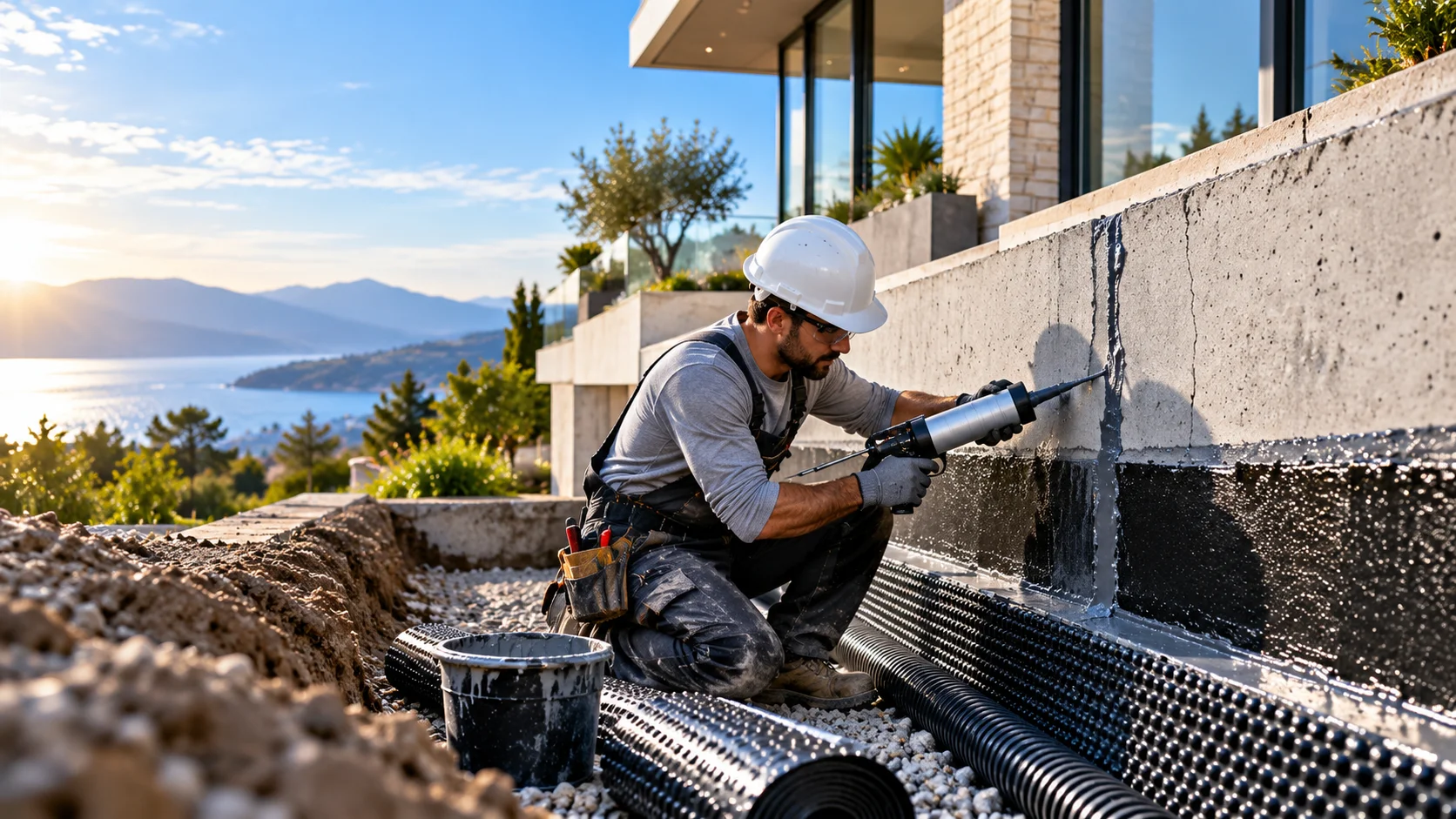
Foundation Crack Repair for Leaking and Weeping Cracks
Epoxy and polyurethane injection that closes the crack through the full wall thickness.
Call (971) 772-3963What a crack in your foundation is telling you
A crack in a basement wall can be a harmless hairline from when the concrete cured, or the first sign of a wall that is moving. The width, direction and whether it leaks tell most of the story, and they decide how fast you need to act.
In Portland, water is behind many of them. Rain from October to May saturates clay and silt, and that soil gets heavy and presses against the foundation. Concrete handles pressure well, but it does not bend, and when the load exceeds what the wall can take at one point, it cracks. Clay also swells when wet and shrinks when dry, so the soil beneath a footing moves a little every year.
Once a crack opens, water uses it. Water moving through a crack carries away fine material and widens the opening, and it carries moisture into the basement or crawl space. Foundation crack repair closes the crack through the full thickness of the wall, so water and air stop passing through.
Portland houses crack for a handful of reasons. Concrete shrinks as it cures, clay soil swells and shrinks with the seasons, and a few of the slopes that Portland homes are built on drift slowly downhill. Most of that is normal. What matters is whether the crack is leaking, growing or running in a direction that points to pressure.
How we handle foundation crack repair, step by step
We choose the material based on whether the crack is moving and whether it leaks.
- Step 1: Evaluate the crack. We measure width, length and direction, check for movement and look at the wall for signs of bowing or settlement.
- Step 2: Clean the surface. Dust, paint and loose material are removed so injection ports can seal to the wall.
- Step 3: Set injection ports. Small ports are fixed along the crack at regular spacing.
- Step 4: Seal the face. The crack surface between the ports is sealed with an epoxy paste, so injected material stays in the crack.
- Step 5: Inject. Starting at the lowest port, material is injected until it shows at the next port, working up the crack. Epoxy bonds and restores strength in a stable crack. Polyurethane expands to stop flowing water and stays flexible in a crack that moves.
- Step 6: Cure and remove ports. After the material cures, ports are removed and the surface is ground smooth.
- Step 7: Check the cause. We look at the outside drainage and soil. If water pressure is the cause, we recommend fixing that.
Most cracks are done from the inside, so there is no digging. For cracks that keep coming back or walls that are bowing, we may recommend additional work after an evaluation.
A crack gauge or a pencil line and a date can tell you a lot. If a crack has not moved in a year, a rigid epoxy repair is usually the right answer. If it opens and closes through the seasons, a flexible polyurethane fill moves with it. Our foundation crack repair starts with that question, because the wrong material fails in a season or two.
Signs you need foundation crack repair
- A crack that leaks or shows dampness after rain
- A crack wider than about one-eighth of an inch
- A horizontal crack along a basement wall
- Stair-step cracks in block or brick foundations
- A crack that has grown longer or wider over time
- Doors and windows that stick or no longer close properly
- White mineral deposits or rust stains along a crack
- Cracks near corners, windows or where beams sit on the wall
What affects the cost of foundation crack repair
A single short crack is a small repair, and a wall with many cracks is a bigger one. These are the main factors:
- Crack length and number: More linear feet means more ports and more material.
- Width and depth: Wide cracks and thick walls take more injection material.
- Material: Epoxy for structural bonding or polyurethane for water stopping, which are priced differently.
- Access: Finished walls and stored items need to be cleared, or work happens from the outside.
- Cause: If movement or water pressure needs additional repair, the scope grows.
For exact pricing on your foundation, call (971) 772-3963.
When foundation waterproofing is the better fit
Crack repair closes the crack. It does not reduce the water pressure that opened it. If you have one or two leaking cracks and the rest of the wall is dry, repair is usually the right and economical fix.
If cracks keep appearing, if the wall is damp in many places or if water is also coming in at the floor joint, you likely need foundation waterproofing. That adds drainage and a membrane, so the wall is no longer holding back saturated soil on its own. Many homes need both: seal the cracks, then manage the water that caused them.
Why acting before the next rainy season matters
A leaking crack in a Portland foundation does not heal. Each wet season, water flowing through it widens it a bit, and winter freeze-thaw in cold snaps adds to the movement. A thin crack in September can be an inch-wide leak by spring.
Moisture coming through the crack feeds mold in the basement or crawl space. It also rusts the steel inside the wall, and rust expands and splits the concrete from within.
The bigger risk is structural. A horizontal crack often means soil pressure is pushing the wall inward, and the longer it goes, the more the wall can move. Repairing a crack and addressing its cause in fall costs far less than rebuilding a wall after a wet winter.
Foundation crack repair FAQ
Are all foundation cracks serious?
No. Hairline vertical cracks are common and often only need sealing. Horizontal, wide, growing or leaking cracks need evaluation and repair.
Should I use epoxy or polyurethane?
Epoxy bonds the concrete back together and suits stable, structural cracks. Polyurethane stays flexible and stops water, so it suits leaking cracks and ones that may move. We choose based on the crack.
Can you repair a crack while water is leaking?
Yes. Polyurethane reacts with water and expands to fill the crack, even while it is flowing.
Will the crack come back?
A crack injected through the full wall usually holds. If soil pressure or movement continues, a new crack can open nearby, which is why we look at the cause as well.
How long does a crack repair take?
One crack takes a few hours. Several cracks take a day or two. Epoxy needs time to cure, and we tell you when it is safe to put the area back in use.
Can I watch a crack to see whether it is growing?
Yes. Mark the ends with a pencil and date them, or place a ruler and photograph it every few weeks. If it grows through the wet months, call us. We would rather see it early.
Does a repaired crack weaken the wall?
No. Epoxy injection can restore the wall's strength across the crack, and polyurethane seals it without bonding. Either way, the repair is meant to hold for as long as the wall does.
Call (971) 772-3963 and tell us about the crack. Photos help, and we will schedule a visit to look at it.
Where we do this work
Need foundation crack repair?
Office hours Mon–Fri 8 AM–5 PM. Emergency calls 24/7.