
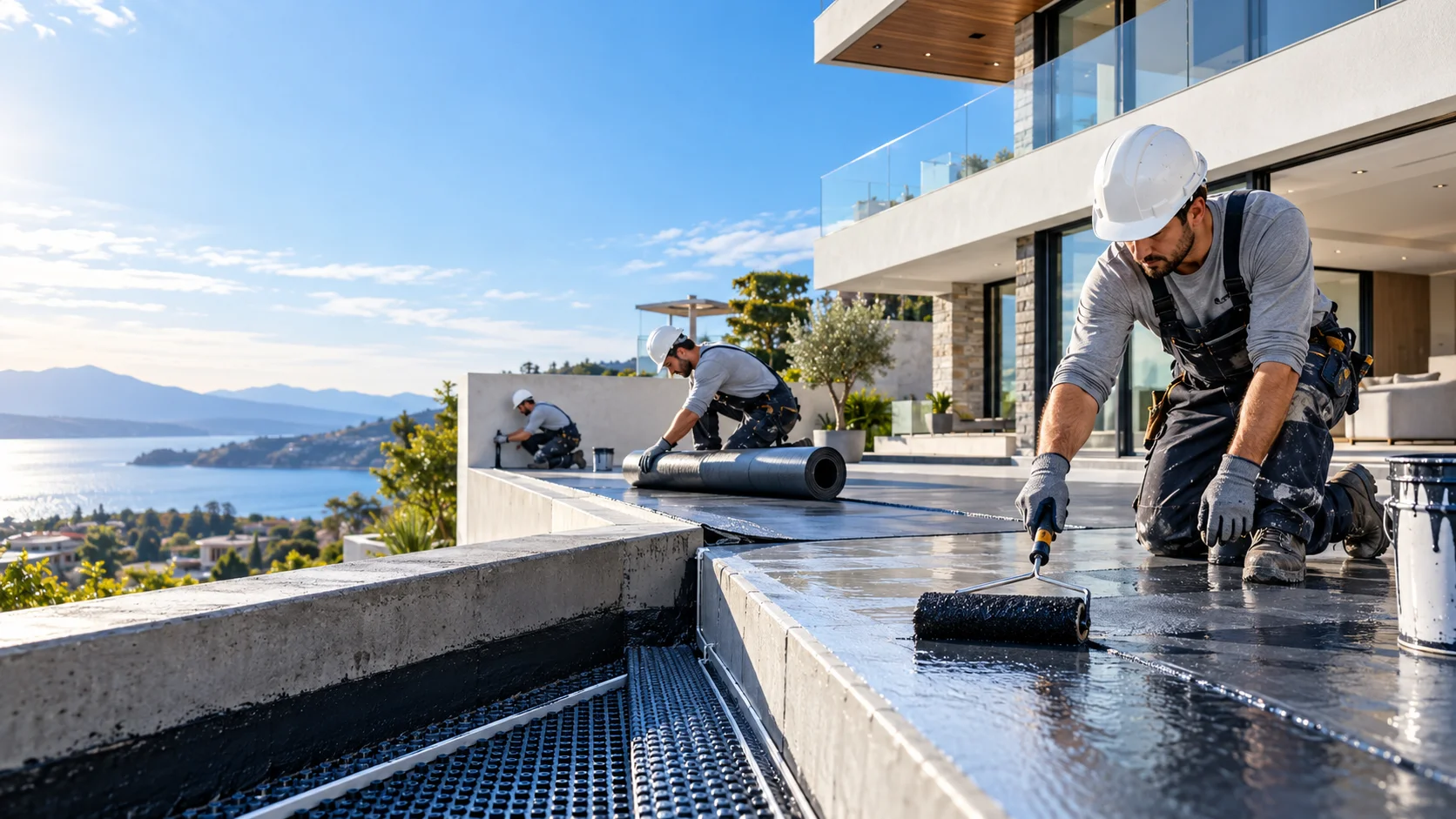
Wet Basement and Crawl Space Waterproofing in West Linn
Basement, crawl space and foundation waterproofing for West Linn homes.
Call (971) 772-3963Why West Linn Basements Take on Water
Some West Linn driveways drop at a pitch steep enough that you notice it in the car, and the house at the bottom takes whatever runs down it. Rain that falls on the street and the lots above rolls downhill and ends up against foundation walls that were never designed for that load.
The city sits on bluffs and ridges above the Willamette, with the Tualatin River forming its southern edge. Between them, the terrain rises and falls in steep steps. Water that falls on a hillside lot runs along the slope until it meets a wall, a retaining structure or a low spot, and then it soaks into soil that is mostly clay.
Many homes were built in the 1970s through the 1990s with daylight basements, split levels and retaining walls. Cut-and-fill lots leave one side of the house buried and one side exposed. The buried side carries the soil load and the water, and it is the side that leaks.
Not every house has a basement. Split levels often have a crawl space under the garage-side or the bedroom wing, and on a slope that space can collect standing water under the house while the finished rooms upstairs stay dry. The first sign is a musty smell near the lower stairs, and a wet basement on the other side of the same house is common.
A West Linn waterproofing contractor has to think about the whole lot, not just the wall that shows the stain, because water arrives from above and does not care where the finished rooms are.
Basement & Crawl Space Waterproofing Services in West Linn
Basement Waterproofing
Interior drains and a sealed sump for the buried wall of a hillside basement.
Basement Leak Repair
Crack and joint injection where hillside water pushes through the uphill wall.
Crawl Space Waterproofing
Drain pipe and a pump for crawl spaces below a runoff-heavy slope.
Crawl Space Encapsulation
A sealed liner and dehumidifier for damp crawl spaces under split-level homes.
Crawl Space Vapor Barrier Installation
Taped ground cover for a crawl space that only gets damp from the soil.
Foundation Waterproofing
Membrane and drainage board against the soil load on a cut-in lot.
Exterior Waterproofing
Dig to the footing, seal the wall and drain the hillside around it.
Foundation Crack Repair
Epoxy or polyurethane injection for cracks opened by slope movement.
French Drain Installation
A drain across the slope above the house to catch runoff.
Sump Pump Installation
A sealed basin and pump at the low corner where runoff collects.
The Fixes That Fit Local Homes
Steep lots favor a few jobs. Which one fits depends on what is above the house and what can be reached.
Exterior Waterproofing
For a buried wall holding back a hillside, the most thorough fix is on the outside: excavate, seal the wall and install a drain at the footing. It stops water before it reaches the concrete. Read about exterior waterproofing in West Linn.
French Drain Installation
On steep lots, a French drain across the slope above the house intercepts runoff. We route it to a safe discharge point down the slope and away from the neighbors' property. See French drain installation.
Foundation Crack Repair
Slopes shift, and foundations on cut-and-fill lots can crack as the soil moves. Foundation crack repair injects leaking cracks from inside, and we evaluate walls for signs of movement at the same visit.
Sump Pump Installation
At the bottom of a slope, groundwater collects around the foundation. Sump pump installation puts a sealed basin and pump where the water gathers, and a battery backup keeps the pump running when storms knock out power.
Crawl Space Encapsulation
For the crawl space under a split level or a garage-side wing, drainage comes first and then a sealed liner. Crawl space encapsulation ends the damp air that rises into the house, and a crawl space vapor barrier is enough for a space that stays dry.
Where several walls are wet, basement waterproofing in West Linn adds interior drain tile along the slab edge. A leaking basement on a single wall may only need the crack sealed.
What October to May Does to a Foundation
October storms soak steep lots fast, and the soil on a slope reaches saturation sooner than flat ground because water is arriving from above. By December, runoff flows over the surface and through the soil toward the foundations below.
During January and February, hillside homes carry the heaviest load. Retaining walls hold back wet soil that gets heavier with every storm, and pressure on foundation walls rises. Basements at the base of a slope see seepage along the floor joint and damp walls.
The wet lasts into spring, and steep lots dry slowly. That is long enough for mold to take hold behind finished walls. Working in summer lets crews dig and set drains on dry ground, which is much harder on a slope in winter.
On a slope, the water does not all leave at once. Some runs off the surface in minutes, but the rest soaks into clay and moves downhill for days, arriving at the foundation long after the rain has stopped. A wall that leaks two days after a storm is not a mystery, and it explains why a drain placed above the house can make such a difference.
A site visit covers the buried wall and the floor joint, the retaining walls and their drainage, the grading above the house, the gutters and downspouts, and any crawl space. We also look at where the neighbors' water goes and where yours can safely go.
Sequence matters on a slope. We start uphill: intercept the water above the house, then deal with the wall, then drain the crawl space. Working in that order means each new piece is not asked to handle water that a later piece will remove, and a new membrane is never buried under a trickle from above. It also keeps the excavation short, because the drain above the house often lets us leave part of the wall alone.
Access is the other deciding factor. A steep side yard may be reachable only by hand, so soil moves in buckets and wheelbarrows rather than with a machine. That adds time, and we say so in the scope up front.
Streets and Areas We Work In
Around West Linn we are called to everything from the Willamette neighborhood along Willamette Falls Drive to Bolton, Robinwood and the streets off Rosemont Road and Salamo Road. Homes on the bluffs above the river and on the slopes around Highway 43 see the heaviest runoff, and lots near the Tualatin River edge see higher groundwater.
Many homes here have decks, stairs and retaining walls built close to the foundation, and they decide how we reach the problem. We look for the safest route for equipment, the best place for a drain outlet and whether the neighbors' runoff is part of the picture. Where a lot is too steep or tight for exterior work, interior drainage and crack sealing protect the basement without disturbing the slope. That is how waterproofing services in West Linn adapt to terrain.
Up and down the river we also work in Lake Oswego and Tualatin, which share similar hillsides and clay soils.
How Basement Waterproofing Works in West Linn
Call about the lot
Tell us how the lot slopes and which wall is wet.
We work uphill first
We map where water enters above the house, then check the buried wall, retaining walls and crawl space.
We drain, then seal
A drain above the house comes first, then the wall or crawl space, in the order that keeps the work short.
How Much Does Waterproofing Cost in West Linn?
What waterproofing costs in West Linn depends mostly on how much digging the slope requires and how much finished space is at risk. These are typical ranges for the jobs we do most here.
| Service | Typical range |
|---|---|
| Exterior Waterproofing | $8,000 – $25,000 |
| Basement Waterproofing | $4,000 – $12,000 |
| French Drain Installation | $2,500 – $10,000 |
| Foundation Crack Repair | $500 – $2,500 |
Steep lots can mean hand digging and longer drain runs, which raise the price compared with a flat yard.
These are estimates, not quotes. For an exact price on your home, call (971) 772-3963 and we will schedule a site visit. You can also see pricing for every service.
What Homeowners Here Ask Us
Why does water collect at the bottom of my steep lot?
Water runs downhill until it meets a wall or low spot. Clay soil absorbs slowly, so more of it flows across the surface and gathers at the foundation.
Can a French drain protect a house on a steep lot?
Yes, when it is placed to intercept runoff above the house and sent to a safe outlet. It reduces the water that reaches the foundation, though it may not stop every leak.
Are cracks in a hillside foundation more serious?
They can be, because soil movement adds load. Horizontal cracks or walls that bow need evaluation. Most leaking cracks can be sealed by injection.
Do retaining walls need drainage?
Yes. A wall without drainage holds back water and soil, and pressure builds. Weep holes and gravel behind the wall relieve it.
Call (971) 772-3963 about a leaking wall on your West Linn lot. Tell us how the lot slopes and we will schedule a visit.
Wet Basement or Crawl Space?
Office hours Mon–Fri 8 AM–5 PM. Emergency calls 24/7.