Waterproofing for Portland basements, crawl spaces and foundations
Dry floors, sealed walls and drains that keep up with October to May rain.
Call (971) 772-3963Basement, Crawl Space and Foundation Waterproofing Services
Wet basements, damp crawl spaces, cracked foundations and flooded yards. Pick the job closest to what you are seeing. If you are not sure, call and we will point you to the right one.
Basement Waterproofing
Interior drain tile, a wall drainage membrane and a sealed sump keep water off the floor. Built for clay soil and a wet January.
View service02Basement Leak Repair
Polyurethane crack injection and sealed joints stop a leaking basement at the point of entry. Best when only a few spots leak.
View service03Crawl Space Waterproofing
Perimeter drain pipe and a sump pump clear standing water under the house. Done before any liner goes down.
View service04Crawl Space Encapsulation
A sealed liner on floor and walls, closed vents and a dehumidifier end the musty smell. The full fix for a humid crawl space.
View service05Crawl Space Vapor Barrier Installation
A reinforced, taped ground cover stops moisture rising from bare dirt. The lower-cost option for a mostly dry crawl space.
View service06Foundation Waterproofing
Membrane, drainage board and a footing drain relieve groundwater pressure on the wall. Inside or outside, depending on access.
View service07Exterior Waterproofing
We dig to the footing, seal the wall and lay a new perimeter drain. The most thorough fix for a failed old drain.
View service08Foundation Crack Repair
Epoxy or polyurethane injection closes a leaking crack through the full wall. The material depends on whether the crack moves.
View service09French Drain Installation
Gravel-wrapped perforated pipe carries yard runoff away from the house. Sloped to daylight, a dry well or a pump.
View service10Sump Pump Installation
A sealed basin, a properly sized pump and a battery backup sump pump option. Keeps rising groundwater off the floor.
View serviceSigns Your Home Needs Waterproofing
Water leaves clues long before it floods anything. If you recognize more than one of these, the problem is usually drainage, and it will not fix itself.
- Water on the basement floor after rain, along the wall or at the floor joint
- A musty smell that gets stronger every fall and winter
- White powder on walls, called efflorescence, where water has moved through concrete or block
- Peeling paint or bubbling drywall low on a basement wall
- Cracks in the foundation wall, especially horizontal cracks or ones that weep
- Standing water in the crawl space or soil that stays soft and shiny
- Damp or sagging insulation under the floor
- Rust on the furnace, water heater or support posts near the floor
Why Portland Basements Leak: Rain and Clay Soil
Portland gets most of its rain between October and May. The soil under much of the metro area is clay and silt, which drains slowly. Rain that falls on the lot soaks in beside the house, cannot sink any deeper, and presses sideways against the foundation.
Concrete is porous. Under that pressure, water moves through the wall, up through the joint where wall meets floor, and into any crack that has opened. In a crawl space it simply rises out of the soil and stays.
Older homes add another layer. Footing drains installed before the 1970s were often clay tile or perforated pipe laid without filter fabric. Decades of silt and roots clog them. The drain that was supposed to carry water away now holds it against your foundation.
Three steps from wet to dry
Call and describe it
Tell us where the water shows up, when, and how long it has been happening. Photos help. We book a site visit.
We trace the source
We check walls, floor joints, window wells, downspouts and grading to find where water enters. Then we lay out the fix, the materials and the price.
We do the work
Drains, membranes, sealing, liners or pumps installed, tested under load, and cleaned up before we leave.
Basement, crawl space or foundation?
Water on the basement floor or walls. Start with basement waterproofing if several areas are wet. If one crack or joint leaks, basement leak repair is the faster fix.
Musty smell, damp insulation or standing water under the house. Look at crawl space waterproofing for drainage and crawl space encapsulation for sealing.
Cracks in the foundation wall. Foundation crack repair closes the crack. Foundation waterproofing deals with the water behind it.
Wet yard or runoff toward the house. A French drain moves water away. A sump pump removes what reaches the foundation.
Built Around Portland Conditions
Sized for clay soil
Drain pipe, gravel and pumps are sized for slow-draining ground and a wet winter, not an average year.
Source first
We find where the water enters and fix that, instead of coating the part you can see.
Inside and out
Interior drains, exterior excavation and crawl space work from one crew, so the plan fits the house.
Plain scope
You get the work, the materials and the price range explained in words, before anything starts.
Homes and buildings
Single-family houses, apartment buildings, garages and elevator pits.
Emergency line
Water coming in at night or on a weekend? Call and we answer.
Commercial Waterproofing for Portland Buildings
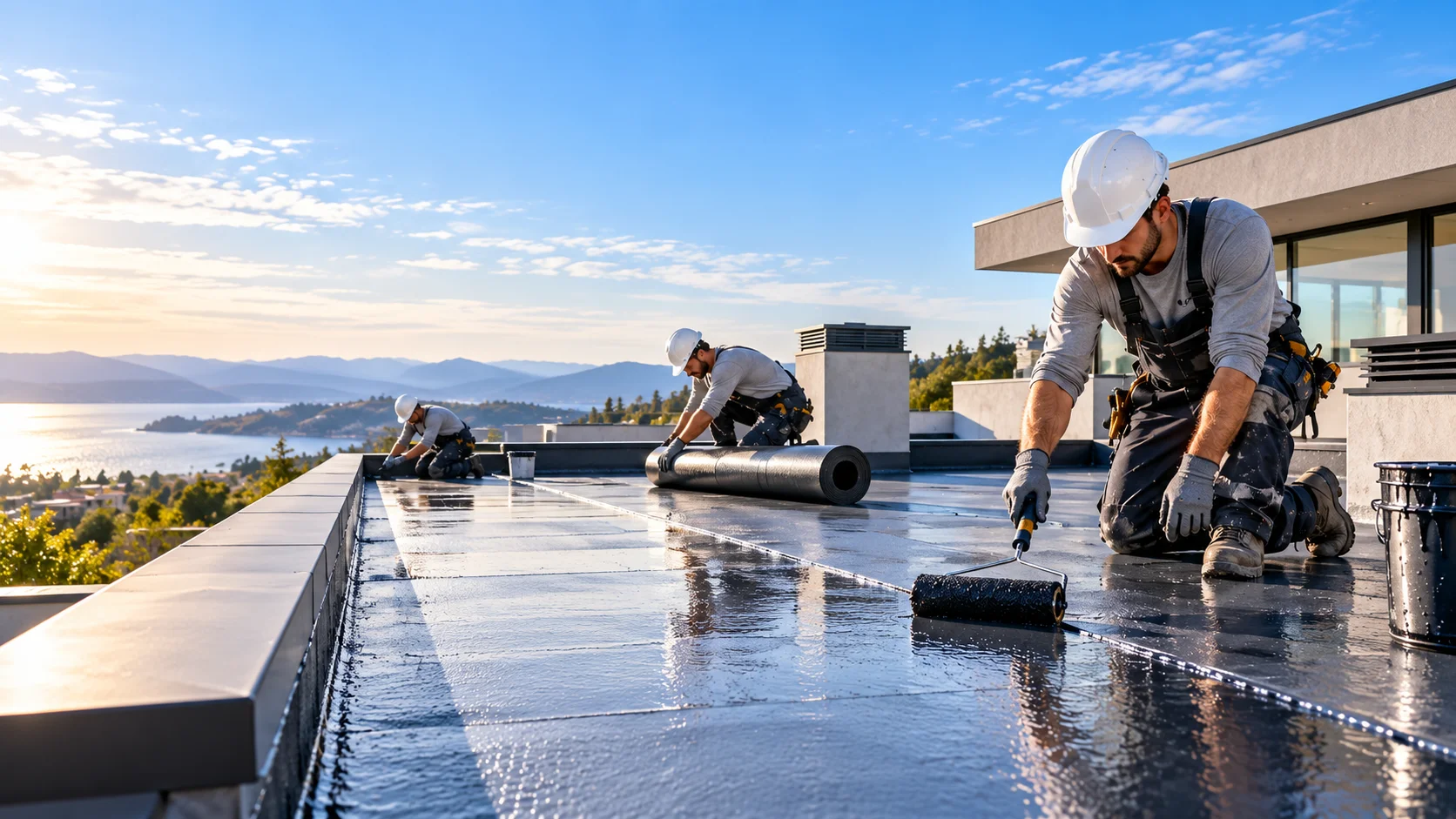
Property managers and HOA boards call us for leaking parking garages, wet elevator pits, damp retail basements and apartment crawl spaces. The methods are different from a house: injection grouting, below-grade membranes and drainage sized for a larger footprint.
We phase the work around tenants and keep access open. See how commercial waterproofing works.
Portland Neighborhoods We Work In
Southeast Portland near Johnson Creek. Lents and Brentwood-Darlington sit on low ground along the creek, where groundwater rises into basements and crawl spaces every winter. Many homes here are postwar ranches and bungalows with older footing drains.
The West Hills and Southwest hillside lots. Steep streets send runoff downhill into the buried wall of daylight basements. Retaining walls and sloped yards make drainage above the house as important as sealing the wall.
Older Northeast Portland basements. Craftsman and Foursquare homes from the early 1900s often have stone or early concrete foundations, and many have seen decades of seepage and patching.
North Portland and St. Johns. Low ground near the Willamette and Columbia keeps the water table close to the surface. Crawl spaces here fill with standing water, and basements seep at the floor joint.
What Waterproofing Costs in Portland
No two jobs price alike. Four things move the number, and we walk through each one on the site visit.
Size
Linear feet of wall, square feet of floor or length of trench.
Access
Finished walls, tight crawl space hatches, decks and landscaping in the way.
Soil and water
Heavy clay and a high water table call for larger drains and stronger pumps.
System type
Sealing a crack, installing an interior drain and excavating the outside are three different price levels.
Waterproofing Service Areas Around Portland
From Gresham to Tigard and across the river in Vancouver, WA. Pick your city to see what we handle there.
Questions we hear most
How do I know if my Portland basement needs waterproofing?
Look for water at the base of walls after rain, white mineral crust on concrete, a musty smell that returns each fall, or paint peeling low on the wall. Any one of those means water is getting through. Call us and describe what you see, and we will tell you whether it points to a drainage problem or a single leak.
What is the difference between basement waterproofing and basement leak repair?
Waterproofing is a system: interior drain tile, a wall membrane and a sump pump that manage water across the whole basement. Leak repair is a targeted fix for one crack, joint or pipe entry. If one spot leaks only in the worst storms, repair may be enough. If water shows up in several places, you need drainage.
Do crawl spaces really need to be sealed?
In Portland, usually yes. Open vents let wet winter air in, and bare soil gives off moisture for seven months. A sealed liner with humidity control keeps the framing dry and stops the damp smell that rises into the house.
When is the best time to waterproof?
Late summer and early fall. The ground is dry, trenches stay open, and the work is done before the October rain starts. You can still fix a problem in winter, but wet soil makes excavation slower.
Do you work on commercial buildings?
Yes. We handle parking garages, elevator pits, below-grade walls and multifamily crawl spaces. See our commercial waterproofing page for the methods and how we schedule around tenants.
How much does waterproofing cost?
It depends on size, access, soil and the type of system. Our pricing page shows typical ranges for each service, and we give exact pricing after a site visit. Call (971) 772-3963 to book one.
Water in the house? Call us.
Office hours Mon–Fri 8 AM–5 PM. Emergency calls 24/7.