
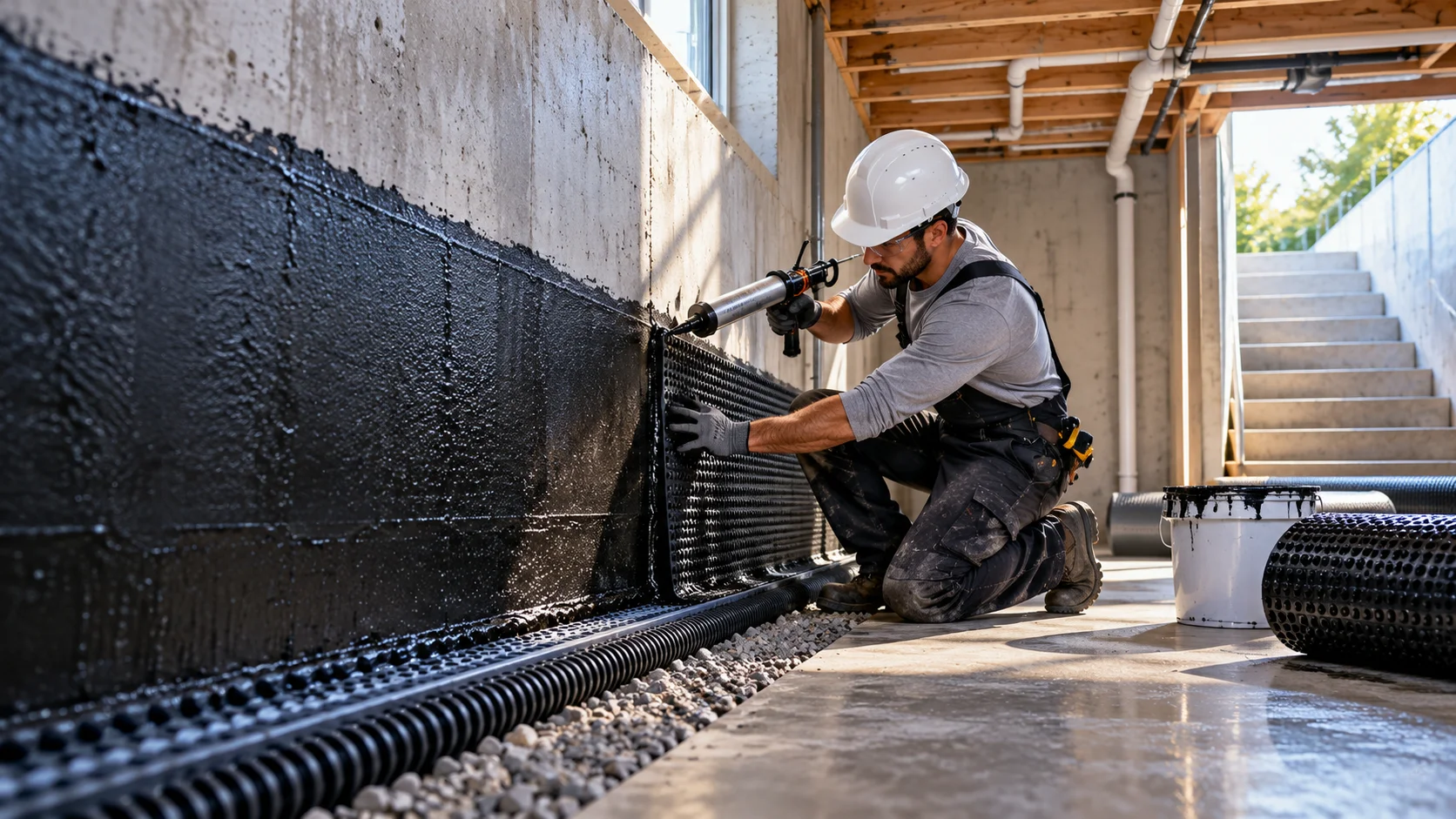
Crawl Space and Basement Waterproofing for Cedar Hills Homes
Basement, crawl space and foundation waterproofing for Cedar Hills homes.
Call (971) 772-3963What Makes Cedar Hills Homes Wet
Walk the quiet streets off Walker Road and Barnes Road and you will notice how many low, wide ranch houses sit close to the ground, each on a crawl space just a couple of feet deep. That is Cedar Hills: mid-century homes built on clay that drains slowly, with very little room under the floor for water to go.
The area sits on a gentle slope with few steep drops, so rain does not run off quickly. It soaks in, and the clay holds it. Roof water often drains right beside the foundation, and many lots are flat enough that puddles stand near the house for days. From October on, that water soaks the soil under the home.
The result is a crawl space that fills in winter. Homeowners lift the hatch and find damp soil, wet insulation and a musty smell that has been rising through the floor for months. A crawl space this shallow has no buffer. Even a few inches of standing water under the house reaches the framing.
Basements are the exception here, but they exist. A few homes have a partial basement under one end of the house, and those can turn into a wet basement when the footing drain fails. It is the same clay and the same slow ground, just a different room to flood.
If you are looking for a Cedar Hills waterproofing contractor, the first thing to settle is which kind of water you have: surface runoff against the wall, groundwater rising from below, or humid air coming in through the vents. Each one gets a different fix, and treating the wrong one wastes a season.
Basement & Crawl Space Waterproofing Services in Cedar Hills
Basement Waterproofing
Slab-edge drainage and a pump for the few basements on level, wet ground.
Basement Leak Repair
Targeted sealing for single leaks in basements on flat lots.
Crawl Space Waterproofing
Drainage and a pump for water that has nowhere to run off a level lot.
Crawl Space Encapsulation
A full liner and dehumidifier for the shallow crawl spaces common here.
Crawl Space Vapor Barrier Installation
A lower-cost floor barrier for crawl spaces that are otherwise dry.
Foundation Waterproofing
Footing drain and sealing for foundations on slow-draining ground.
Exterior Waterproofing
Full excavation and a new perimeter drain when interior fixes fall short.
Foundation Crack Repair
Inside-the-wall crack injection that needs no digging in the yard.
French Drain Installation
A sloped drain that gives flat-lot yard water somewhere to go.
Sump Pump Installation
A pump and basin sized for the lift on a level lot.
Basement and Crawl Space Repairs We Handle Most Here
Four jobs cover most of the calls from this part of town.
Crawl Space Encapsulation
With so many ranch homes on short crawl spaces, sealing the floor and walls and adding a dehumidifier is the most common request. It stops the damp air from rising into the house and keeps the framing dry. See crawl space encapsulation in Cedar Hills for the steps.
Crawl Space Waterproofing
Where there is standing water, drainage comes first. We lay perimeter pipe in gravel along the footing and add a sump pump installation to move water out, so the liner goes over dry ground. A liner laid over water only traps the problem under plastic.
French Drain Installation
Flat, slow-draining lots need help moving water away from the house. A French drain along the downhill side or around the foundation carries runoff to a discharge point instead of letting it stand beside the wall.
Choosing between sealing the whole space and covering the floor is the question we hear most. A floor barrier costs less and suits a crawl space that is dry apart from ground moisture. If the smell, the sagging insulation or the humidity continue with a barrier in place, the vents and walls are the missing piece, and the full liner is the better spend. We show you the readings and let the numbers make the case.
Crawl Space Vapor Barrier Installation
Plenty of older crawl spaces here have torn plastic or bare soil. A heavy, sealed crawl space vapor barrier over the floor is a simpler fix when the space is otherwise dry. Read about crawl space vapor barrier installation.
For the few homes with a partial basement, basement waterproofing in Cedar Hills means interior drain tile along the slab edge and a sealed sump, with foundation crack repair for any wall that weeps. We size the system to the water, not to the room.
Winter Groundwater and Your Crawl Space
Dry summer soil absorbs the first rains. By mid-November, the clay is full and every storm after that adds water the ground cannot take. In a ranch house on a short crawl space, the groundwater level reaches the underside of the floor system.
Through the winter, the crawl space stays wet. Vents let in humid air, wood framing soaks it up and insulation sags under the weight. The floor above feels cold, and the furnace works harder as wet insulation stops insulating.
By spring, the damage has built for months. Mold on joists, rust on ducts and rodents nesting in damp insulation are common finds. Starting before October gives a dry space the whole season, and the work goes quicker in dry soil.
It is also worth knowing how slowly the ground drains. Clay near the surface can stay wet for days after the last storm, so a crawl space that looks dry on a sunny afternoon in February may be wet again by the next rain. That is why we install the drain and pump to handle a wet week, not a dry day.
A site visit covers the crawl space floor and walls, the vents, the insulation and the framing moisture, plus the downspouts, the grading around the house and any basement walls. We take photos of what we find so you can see the same thing we do, and then we lay out the work and the price.
Homes here were built in tracts, so the same details repeat: foundation vents on every wall, a hatch in a closet or hallway, batt insulation held up with wire, and downspouts that dump onto a concrete splash block. Knowing those details lets us spot problems quickly. A splash block that tilts toward the house, for example, can send hundreds of gallons a season straight under the floor.
Around Cedar Hills and Nearby Towns
Waterproofing services in Cedar Hills cover the streets around Cedar Hills Boulevard and the shopping area at Cedar Hills Crossing, the homes off Walker Road, and the neighborhoods near Cedar Hills Park. The flatter blocks along Barnes Road see the most standing water, and homes with downspouts that drain at the foundation are the first to show a wet crawl space.
The same crews work in nearby Cedar Mill and Beaverton, where the housing and soil are similar.
Many owners here bought the house years ago and have never been under it. That is normal, and it is why a crawl space problem often runs for several winters before anyone looks. If you have not opened the hatch since you moved in, fall is a good time. A flashlight, a pair of gloves and ten minutes will show you the soil, the insulation and any water marks on the walls.
How Basement Waterproofing Works in Cedar Hills
Open the hatch, then call
Describe the smell and the insulation under your floor. Photos from the hatch are a great start.
We measure the crawl space
We take humidity and framing moisture readings, then check the vents, the soil and the downspouts.
We dry it, then seal it
Drain and pump first if there is water, then liner and dehumidifier. We show you the readings afterward.
How Much Does Waterproofing Cost in Cedar Hills?
What waterproofing costs in Cedar Hills depends on how much water collects and how far it has to be moved. These are typical ranges for the jobs we do most here.
| Service | Typical range |
|---|---|
| Crawl Space Waterproofing | $3,000 – $9,000 |
| Crawl Space Encapsulation | $4,000 – $12,000 |
| Sump Pump Installation | $1,200 – $4,500 |
| French Drain Installation | $2,500 – $10,000 |
Shallow ranch crawl spaces make the work slower, but short runs of pipe keep many quotes in the middle of the range.
These are estimates, not quotes. For an exact price on your home, call (971) 772-3963 and we will schedule a site visit. You can also see pricing for every service.
Local Basement and Crawl Space Questions
Why is my crawl space damp when there is no standing water?
Clay soil gives off moisture all winter, and vents let in humid air. The crawl space can be damp and musty even with no puddles, which points to humidity and ground moisture, not liquid water.
Should I add more insulation to a cold floor?
Not before fixing the moisture. Wet insulation does not work and sags. Dry the space and seal it first, then insulate if needed.
Do ranch homes from this era need foundation crack repair?
Many have hairline cracks from settling. Those that leak or widen should be injected. Most cracks can be repaired from inside the crawl space or basement.
Can I handle a leaking basement or crawl space myself?
Clearing debris and extending downspouts help. Plastic sheeting alone does not stop humidity or standing water. A drain, pump and sealed liner address the cause.
Call (971) 772-3963 if your ranch house has a damp crawl space. Describe the smell and the insulation, and we will set up a visit.
Wet Basement or Crawl Space?
Office hours Mon–Fri 8 AM–5 PM. Emergency calls 24/7.